Thursday, March 13, 2008

Bravo for Bava!


In Los Angeles, between the New Beverly Cinema, the newly remanaged Silent Movie Theatre, occasional AFI screenings at the Arclight and the American Cinematheque, to name a few, you have no paucity of repertory movie options. This is often a double-edged sword for me since even though I try, due to other social engagements or lack of energy, I can only attend a fraction and always feel I missing some great series. I cannot imagine the lack of social life and fresh air that I would be confronted with if I lived in New York or the 1970's when the rep theatre was in its renaissance.

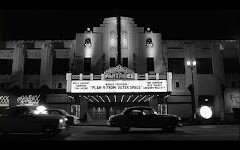
One series I will definitely be attending, though not as often as I'd like, is The Egyptian series Mario Bava: Poems of Love and Death dedicated to the Italian master genre filmmaker. As shameful as it is to admit, up until last year I had seen a grand total of one of his films, Black Sunday, but started to make up for it in 2007 by purchasing both of the Mario Bava's Anchor Bay DVD sets as well as two of his films that were not in either set, Danger: Diabolik! (I also saw it at the New Beverly during the Edgar Wright fest where Gremlins director Joe Dante introed it and then sat in the aisle across from me!) and Blood and Black Lace and am becoming a huge fan of his.

Thanks to the DVD sets and the assistance of biographer Tim Lucas, who literally wrote the book on Bava (the 1128 page and 12 pound All the Colors in the Dark featuring a foreward by Martin Scorsese) and drops his knowledge on many of the commentary tracks featured in the sets, Bava has been reassesed and his unique use of color, inventive camera work and the amount of followers he inspired has finally earned him some long overdue respect outside of horror fanatics.

Here's the schedule for the program, most of these are now on DVD so if you do not live in Los Angeles or cannot make it, you can at least recreate the festival at your own home, though good luck getting Joe Dante and Eli Roth to speak at your place.

Thursday, March 13th:
Black Sunday & Black Sabbath:


While Bava's colorful production design is often lauded (and for good reason!), with Black Sunday , his "official" directing debut he proves he can be just as crafty with black and white cinematgraphy. Barbara Steele stars as a witch who returns from the dead 200 years after being forced to wear a mask of spikes and she's not in a particuarly forgiving mood. Black Sabbath is an anthology film featuring Boris Karloff in the wraparounds and one of the stories. Roger Corman distrubted and reordered the stories in America, but they are presenting the European cut of the film that provided the name for Ozzy Osbourne's band. Joe Dante introduces the films.


Friday, March 14th:
Five Dolls for the August Moon & Blood and Black Lace:


Although I own August Moon as part of the Bava DVD set, I haven't gotten around to watching it yet (sadly an all too common occurrence, damn life!), the Egyptian calendar describes it as a Pop Art giallo where the idle rich gather for a swinging weekend only to be murdered one by one, which would make it a great mate for Black Lace which is about fashion designers and models being killed off one by one and is considered the first official "slasher" film, and definitely inspired Scream, but telling you how would be revealing a key element. One nitpick, why does Blood not preceed Five Dolls seeing how it was made six years prior?


Saturday, March 15th:
Lisa and the Devil & Baron Blood:


I have tickets for this already and am psyched since shamefully once again I have not seen either. Lisa features Elke Sommer as a woman lured into a spell by the satanic Telly Savales and Baron Blood with its used of Technicolor has been said to be what a Douglas Sirk horror film would look like. Joe Dante introduces and there will be a conversation with producer Alfredo Leone.


Sunday, March 16th:
Kidnapped & Shock:


The common theme of these two films is Bava's collaboration with his son, a horror filmmaker in his own right, Lamberto Bava. Kidnapped was just recently rediscovered after sitting in a vault in Rome for over 20 years before being completed and edited for the DVD release by Lamberto. This is an extremely rare theatrical print screening. Shock was Mario's final film, at the age of 63, co-directed by Lamberto, three years before Mario passed away.


Thursday, March 20th:
Danger: Diabolik & Planet of the Vampires:


You know I find myself more and more disenfranchised with the overuse of CGI in today's filmmaking, and thusly embracing more and more older filmmakers like Bava's optical tricks and set design prowess, both in full display in Diabolik one of the great (if not the greatest) comic book adaptation. It features an amazing Ennio Morricone score (not available on CD...crap) and inspired the Beastie Boy's video for "Body Movin'". Vampires is another Bava blindspot (although I have recently ordered a copy of the DVD) for me, but like Diabolik Bava proves his diversity with another genre other than horror (sci-fi here), although it does contain horror elements. It's said to be a big influence on Ridley Scott's Alien.


Friday, March 21st:
A Bay of Blood (aka Twitch of the Death Nerve) & Four Times That Night:


After inventing the slasher genre with Blood and Black Lace, Bava further redefined it seven years later by creating the limations of a remote location, and thus Friday the 13th and its ilk were born. Bay of Blood features a twist that proves the adage "no one is truly innocent" and a hilarious final scene that comments on violence in a simpler, shorter and more straightforward manner than a Michael Haneke film. While Bava is best known for his horror work, the guy had range; he directed pirate films, westerns, even a James Bond spy spoof along with other genre pictures (the already mentioned Diabolik and Planet of the Vampires) and frequently inserted humor into his horror films. Four Times That Night is inspired by Akira Kurosawa's Rashomon and is of all things, a romantic comedy. Introduction by a guy who made some money homaging Bava's work and style, Eli Roth.


Saturday, March 22nd:
The Whip and the Body and Kill, Baby, Kill!:


The Whip and the Body features Hammer alum Christopher Lee who returns from the dead to haunt and entice his brother's wife (again, haven't seen it yet). Kill Baby Kill! besides having one of history's greatest film titles, is one of Bava's most deliberately filmed picture and none other than Tim Lucas declares it his favorite of the director's work. It's atmospheric nature and use of ghosts of dead children has infulenced the latest wave of J-horror films and their American remakes like The Grudge and The Ring. Former Spike Lee cinematagropher and director of the Snoop Dogg zombie film, Bones, Ernest Dickerson introduces the film.


Sunday, March 23rd:
The Girl Who Knew Too Much & Hatchet for the Honeymoon & Cal Tiki The Immortal Monster:


The series ends with a triple bill of films I haven't seen, The Girl as the title suggests is a Hitchcock homage about a woman who sees a murder and finds herself hunted. Features John motherfucking Saxon! Hatchet is a black comedy about a wedding dress designer who murders brides before their nupitals. Bava was a cinematographer on Cal Tiki before original director Riccardo Freda walked off the set and he completed directing duties. Bava worked as a cinematagrapher for many years before he began his directing career and pretty much shot his entire directorial output. How appropos to end the series with the film that launched his career!

Monday, March 10, 2008

Forbidden Zone (1980, Richard Elfman)


Part of the 80's Project

Richard Elfman's nonsensical cult classic (and nonsensical isn't meant disparagingly, though I did not like the film, but rather because it's the most apt description for the film's plot) is in many ways the forebearer to Aqua Teen Hunger Force and much of the Adult Swim lineup. Cheaply produced it, like Aqua Teen , equates randomness with hilarity and revels in the prodding of sacred cows, but unfortunately like it's followers to meaninglessly ends. For wit, in Forbidden Zone we get the following: an elderly man wearing diapers (ha!), a midget king (played by Herve Villechaize) married to a tall overweight woman (ah!), a woman who is constantly topless (saucy!) and a white character in black face (racy!). I guess if you are on the film's wavelength you'll enjoy yourself, but otherwise, as was the case for yours truly, the paltry 73 minutes running time will feel three times the length.

I'd love to provide you with a plot description but because Elfman and co-writer Matthew Bright (Freeway) made the brave decision of having no plot to speak of, the best I could come up with is: There's a weird zone under a house where a bunch of weird shit happens and there's characters in weird frog masks and uh, yeah, it's weird. I don't consider myself the type of person who's necessarily adverse to non-traditional plotted narratives, I love David Lynch, but the difference between Lynch and something like this is that Lynch's films invent their own narrative language and contain thematic explorations be they paranoia induced by parenthood (Eraserhead), self identity (Lost Highway) or the corrosive nature of Hollywood (Mulholland Drive), whereas Forbidden Zone relies solely on a throw the kitchen sink at 'em philosophy without serving a purpose. According to the film's Wikipedia page, it was conceived as "a musical that consisted of 12 musical numbers and a story loosely constructed around them" (loosely being the key word).

That's not to say the film is totally without merit. The art design nicely embraces theatricality over realism; consisting of paper mache and obviously painted sets interspersed with actual hand drawn animated segments Elfman and company create a visual style inspired by early cartoons and silent German expressionist works that proves that a small budget and a unique visual look are not mutually exclusive, I was reminded of what Lars von Trier did twenty plus years later with Dogville. The other highlight is the music, composed by director Elfman and his younger brother Danny's band The Mystical Knights of the Oingo Boingo (later shortened to the more marquee friendly Oingo Boingo, whose rabid fanbase I assume makes up the majority of the film's proponents), the score and songs consist of a combination of wildly varied genres from cartoon sound effects to Calypso to ska to classic rock to name just some. Apparently Paul Reubens, fan of all things bizarre and kitschy, liked the film so much that when it came to scoring his first Pee-Wee Herman vehicle, he requested Danny Elfman for the job, he would thusly create one of the all time great scores for Pee-Wee's Big Adventure which alone makes the film a worthwhile venture. I guess it's just too bad that it's strengths (the visual and musical style) wasn't put to use towards something a little more comprehensible or at least briefer, like, say a music video for Oingo Boingo.

Sunday, March 9, 2008

What's For Dinner

For the most part this little blog of mine focuses on cinema with an occasional foray into sports, but sports and film are but two of my passions. One of my more recent acquired interests is cooking. Thanks to my lovely wife, I have discovered a culinary jones and thought I should share some of the meals we have made together.

These photos are presented with apologies to my vegetarian and vegan readers.

PAN ROASTED CHICKEN WITH SPAGHETTI SQUASH AND BALSAMIC ROASTED TOMATOES


This was a particularly good dish, the squash and tomatoes were purchased from the Silver Lake Farmer's Market.

SALMON IN WHITE WINE SAUCE WITH TOMATOES AND CAPERS AND SALAD WITH VINAIGRETTE DRESSING

Yes there is actually a salmon underneath all that, unfortunately it was from the Trader Joe's frozen section which is never as good as salmon purchased from a fresh fish market.

GREEK CHICKEN WITH TOMATOES AND FETA AND ASPARAGUS

I felt that this could of been much better than how it ended up tasting, but one of the pleasure of cooking is in perfecting recipes to your liking.

Well thanks for indulging. If you have any recipes you'd like to share, feel free to post them in the comment section.

Bon Appetit!

Monday, February 25, 2008

2008 Academy Award Post-Mortem/Quiz

The last thing the world needs is another blogger opining on this year's Oscar broadcast, but seeing how most "Hollywood insiders" are major douches, I'd thought I'd quickly summarize my thoughts.

Yay: The Coens winning (I also yay all the There Will Be Blood nominations, I am still pleasantly surprised this film has been winning over critics and audiences, who I assumed would consider it too bizarre and unsavory). Javier. Danny D-Lew. Robert Elwist (even if Roger Deakins should have gotten something for his overall awesome year). Jon Stewart--I know some people don't dig him, but I thought his opening monologue had a more favorable hit to miss ratio than the majority of Oscar hosts. I did miss the highlight from the 2006 ceremony, the fake smear campaign ads of nominees, but I am happy that unlike some people, coughBillyCrystalcough, he doesn't just regurgitate his popular material. Also come on, the guy's classy as hell letting Marketa Irglova give her speech. Ironically enough the satirical montage tributes to binoculars and awakening-from-dream scenes were actually less lame than the majority of the actual montages(how many were there, 16,000?).

Nay: Diablo winning. All the Oscar nominated songs except "Falling Slowly". The Atonement score winning, not only because Jonny Greenwood should have won, let alone be nominated (dumb Oscar rules) but because it's a second rate Phillip Glass rip-off. Deeming Brad Renfro and Ulrich Muhe unworthy of the memorial tribute (Scheider missed the cut-off date apparently). The Fucking Jerry Seinfeld BEE: dude, let it die.

Other than that, not much worth getting my panties in a bunch.

I hosted an Oscar party this year and in addition to the predict the winners contest (where I ended up in fourth place with 13 correct predictions), I also created a 25 question Oscar History quiz that I had my guests answer. Out of my eleven friends the most anyone got correct was 16 (congrats, Chan!).

Do you think you can do better? Well, here it is, I'll abide by the honor system--so no Wikipedia or IMDB. If you are interested, please put your answers in the comments section. In a couple of days I'll post the correct answers there.

Enjoy!

The 2008 Jack Klugman Honorary Oscar Quiz

(beware the trick question or two)

1. Which film won the Oscar for Best Picture 20 years ago?
A. Broadcast News
B. Fatal Attraction
C. The Last Emperor
D. Moonstruck

2. Which film won the Oscar for Best Picture 30 years ago?
A. All the President’s Men
B. Annie Hall
C. Apocalypse Now
D. Star Wars

3. Which film won the Oscar for Best Picture 40 years ago?
A. Bonnie and Clyde
B. Guess Who’s Coming to Dinner
C. The Graduate
D. In the Heat of the Night

4. Which film won the Oscar for Best Picture 50 years ago?
A. The Bridge on the River Kwai
B. Giant
C. The Ten Commandments
D. 12 Angry Men

5. Which film won the Oscar for Best Picture 60 years ago?
A. Gentleman’s Agreement
B. Great Expectations
C. It’s a Wonderful Life
D. Monsieur Verdoux

6. Which classic male movie star never won an Acting Oscar?
A. Humphrey Bogart
B. Clark Gable
C. Cary Grant
D. Gregory Peck

7. Which classic female movie star never won an Acting Oscar?
A. Ingrid Bergman
B. Judy Garland
C. Audrey Hepburn
D. Grace Kelly

8. Which one of these is the only classic director to win an Oscar for Best Director?
A. Howard Hawks
B. Alfred Hitchcock
C. Orson Welles
D. Billy Wilder

9. Another classic iconic director who never won an Oscar was Stanley Kubrick, although he was nominated multiple times, for which film did he not receive a Best Director nomination?
A. Dr Strangelove
B. A Clockwork Orange
C. Barry Lyndon
D. Full Metal Jacket

10. Which actor/director has never won the Oscar for Best Director?
A. Warren Beatty
B. Mel Gibson
C. Paul Newman
D. Robert Redford

11. Which actor/director is the only person to not be nominated for Best Actor & Director for the same film?
A. Woody Allen, Annie Hall
B. Clint Eastwood, Unforgiven
C. Slyvester Stallone, Rocky
D. Orson Welles, Citizen Kane

12. Who is the only French native to never earn an Academy Award nomination?
A. Juliette Binoche
B. Alain Delon
C. Gerard Depardieu
D. Catherine Deneuve

13. Who is the youngest nominated Actress?
A. Abigail Breslin, Little Miss Sunshine
B. Jodie Foster, Taxi Driver
C. Tatum O’Neal, Paper Moon
D. Anna Paquin, The Piano

14. Who is the oldest nominated Actor?
A. George Burns, The Sunshine Boys
B. Henry Fonda, On Golden Pond
C. Hal Holbrook, Into the Wild
D. Peter O’Toole, Venus

15. Which actor never received a nomination for their performance as a member of the Corleone family in The Godfather films?
A. James Caan (Sonny)
B. John Cazale (Fredo)
C. Al Pacino (Michael)
D. Talia Shire (Connie)

16. For which film did Meryl Streep earn her first of 14 Academy Award nominations?
A. The Deer Hunter
B. The French Lieutenant’s Woman
C. Kramer Vs. Kramer
D. Manhattan

17. For which film did Tom Hanks earn his first Academy Award nomination?
A. Big
B. A League of Their Own
C. Philadelphia
D. Splash

18. Steven Spielberg’s first Best Director nomination came for which movie?
A. Jaws
B. Close Encounters of the Third Kind
C. E.T.
D. Schindler’s List

19. Which of these is not a sequel to a Best Picture winner?
A. The Empire Strikes Back
B. The Evening Star
C. Hannibal
D. They Call Me Mister Tibbs

20. Which Academy Award did the first Godfather film not win?
A. Best Actor (Marlon Brando)
B. Best Director (Francis Ford Coppola)
C. Best Picture
D. Best Screenplay (Mario Puzo & Coppola)

21. Which is the only Western never to be nominated for Best Picture?
A. Butch Cassidy and the Sundance Kid
B. High Noon
C. The Searchers
D. Unforgiven

22. Which famous author never received an Academy Award nomination for their work as a screenwriter?
A. William Faulkner, To Have and Have Not
B. Vladimir Nabokov, Lolita
C. Dorothy Parker, A Star is Born
D. John Steinbeck, Lifeboat

23. Which actor has not won an Academy Award for their work as a screenwriter?
A. Mel Brooks, The Producers
B. George Clooney, Good Night and Good Luck
C. Emma Thompson, Sense and Sensibility
D. Billy Bob Thornton, Sling Blade

24. Which one named musical artist has never won an Academy Award?
A. Eminem
B. Madonna
C. Prince
D. Sting

25. Which famous score did not win the Academy Award for Best Original Score?
A. Chariots of Fire (Vangelis)
B. Psycho (Bernard Herrmann)
C. Star Wars (John Williams)
D. The Wizard of Oz (Herbert Stothart)

Thursday, February 14, 2008

Trailer of the Week: My Most Highly Anticipated Movie of Summer '08

No, it's not Indiana Jones and the Temple of the Kingdom of the Last Crystal Skull of the Ark or whatever they're calling it these days. Don't get me wrong, I am looking forward to Steven Spielberg returning to the kinetic action genre, and the trailer does look fun (and Cate Blanchett in tight leather...meow) but there are three factors preventing me from having my excitement raised beyond the "as long as it isn't as bad as The Phantom Menace" level: 1.) Unfortunately, I am the only person alive not to have caught Shia LaBeoufever, he seems to be a likeable enough guy but based on the two movies of his I've seen, Transformers and Disturbia, which granted are both bad movies, I haven't seen anything in him other than a propensity to smirk. Hopefully he'll finally prove to me why Spielberg has decided the kid worthy of being cast in every movie he's remotely involved. 2.) While all the previous Jones films featured state of the art special effects of the day, the action sequences we're pretty much all on-set stunts, the warehouse chase here features heavy use of CGI (and if you are really bored Google Jim Broadbent and CGI pants to see a curious debate the trailer has caused amongst fanboys). 3.) Two words: George Lucas. Yeah, the dude behind the Star Wars prequels. I know he didn't direct or write this, but, he's a major player in the franchise, and did I mention he's the dude behind the Star Wars prequels?

While I'll approach May 22nd with tempered anticipation, the trailer that has me psyched is the red band (meaning cannot be shown in movie theatres for films not rated R and therefore "not safe for work") Pineapple Express.

When it was announced that the vulgar yet sweet styling of producer Judd Apatow and co-writer/star Seth Rogen were collaborating with George Washington and All The Real Girls director David Gordon Green, whose natural lyricism directing resume brings to mind more Terrence Malick than The 40 Year Old Virgin, I thought there might be a natural clash, two great tastes that wouldn't taste great together, peanut butter and hummus, but looking at the trailer, the film looks to be something that I adore: a cinema-knowledgeable mash-up of genre styles (pot comedy, buddy action film)in the vein of some of Jonathan Demme's 80's work like Married to the Mob and Something Wild, films that served and operated in multiple genres, never settling to be just a, say, mob movie with some humor, but a full blown comedy and mob film.

David Gordon Green's movie literate style (in the preview alone there are visual shout outs to Tarantino and Robert Altman's The Long Goodbye) should prevent the inevitable "everything Apatow related" backlash that people will jump on after his less interesting looking producing input Saving Sarah Marshall and Drillbit Taylor open this Spring. It's also great to see James Franco return to playing a sweet dimwitted stoner in the vein of his break-out role as Daniel Desario in Freaks and Geeks after countless bland brooding roles in uninspiring films.

If you don't find the sight of Seth Rogen's (aided by wires)jump off the balcony in the warehouse and Franco's failed attempt to kick in the car window to be glorious and/or hilarious, than I might have no use for you as a human being.

Great use of M.I.A.'s "Paper Planes" too:


Opens August 8th.

Tuesday, February 12, 2008

Death Is Going to Need a Bigger Boat

Roy Scheider 1932-2008


Roy Scheider may not have possessed the movie star looks, his face sans the puncher’s nose is non-distinct and perhaps too “everyday man”-ish, nor decades long endurance, the last movie role I recall of his was The Rainmaker where he had a cameo as the over-tanned CEO of the evil insurance company (although according to his IMDB page he was in the Thomas Jane version of The Punisher, which I did see, but honestly I don’t remember his appearance or much of anything of the film—there was one cool fight between Jane and some big ass guy in a stairway…and uh, that’s about it) nor iconic screen persona of some of his peers like Al Pacino, Robert DeNiro and Jack Nicholson but when it comes to 1970’s portrayals of masculine determination in American cinema, I’d put his performances and filmography between the years of 1971-80, which included The French Connection, Jaws, Marathon Man and perhaps his greatest role, as Bob Fosse surrogate Joe Gideon in All That Jazz, up to their level (I’d also toss Warren Oates name into the conversation).

I had just recently seen for the first time William Friedkin’s Sorcerer, the infamous remake of Wages of Fear and Friedkin’s follow-up to The Exorcist. Scheider still hot off of his lead performance in Jaws, at the time the highest grossing movie in history, was cast after Steve McQueen dropped out due to Friedkin not giving his wife Ali McGraw a cosmetic producing credit. In the fascinating if flawed film, Scheider portrays Jackie Scanlon, a low rent driver who takes part in a plot to rip off the mafia, but when the plan goes awry, as plan to rip off the mob are wont to do, he flees to South America where he lives in squalor under the assumed name of Dominguez. He and three other men with similarly checkered pasts are given the chance to earn some serious cash and citizenship if they can export some nitroglycerin through the jungle in semis with sputtering engines. Of course there are dangerous detours and hazards that test the men’s ability and sanity, the nitroglycerin precariously straddling the point of explosion serving as an ample metaphor for the men’s, and Scheider in particular, emotional wherewithal. {SPOILERS TO FOLLOW} When Scheider alone completes the mission he collapses, a cathartic moment as his utter exhaustion reveals that only the basest human determination got him to the completion. Scheider plays this scene wonderfully, not overstating the moment with histrionics, after hearing reports of director Friedkin’s on set personality, this scene may have served as a true representation of Scheider’s psychology at that very moment. I do feel Friedkin erred a bit with the little dark ironic coda that follows this cathartic moment, where it’s revealed that the mobsters Scanlon were running from are in the same town as him, undermining a great moment.

I think Scheider could have only flourished in two eras of American cinema, and luckily he was around for one, the 1970’s. The other era being 40s-50s film noir, where he could have competed for lead roles with the likes of Van Heflin, Dana Andrews and John Garfield. I am a little bummed that a director such as Quentin Tarantino, Paul Thomas Anderson or Steven Soderbergh never gave him that one last great defining role(s) and rediscovery that they gave to the likes of David Carridine, Burt Reynolds, Kurt Russell, Terrence Stamp and Phillip Baker Hall. The last major project which he was cast in the lead was in 1994, when he reunited with Steven Spielberg and an aquatic setting for the highly hyped but ultimately ratings starved action/sci-fi television series Seaquest DSV. He did keep working steadily over the last twenty years, although mostly in direct to television or video projects. According to other appreciations I’ve read since his passing, he gave a powerful performance on an episode of Law and Order: Criminal Intent last season (you know what’s weird? I’ve never seen a single minute of any Law and Order show). While it’s a shame he fell out of the limelight, at least he didn’t coast on personality and become a self parody as Pacino, DeNiro, Nicholson and Christopher Walken have recently.

Here’s the trailer for Sorcerer:


And the most harrowing moment of the film, the crossing of the dilapidating bridge (in 2 parts):


Thursday, January 31, 2008

Trailer (s) of the Week: Where Roman Has Gone Before

Firstly, you like the title there, huh? Yeah, I went there, there being puns-ville.

Now on to the matter at hand, last week in my review of Tess I commented that while I felt the film was solid overall, the direction lacked that certain Roman Polanski feel. This week I provide two examples of said Polanski feel and an interesting and entertaining dichotomy of how they were marketed to the public.

Exhibit A:

Repulsion (1965) trailer

Polanski's first film made outside of his native country Poland is also the first of a thematic series of film, sometimes referred to as "The Apartment trilogy", each dealing with sexually and/or emotionally repressed women (okay, in The Tenant it's actually a man, played by Polanski himself, who believes he's turning into a woman) who find themselves in solitude in their apartments that become their personal prisons where they slowly but surely become unhinged to the point of violence.

In the trailer for Repulsion, the distributor decided to downplay the methodical pacing of Catherine Deneuve's slow dissent into madness and advertise it more as a sexy thrill-a-minute romp complete with a jazzy drum beat you can dance to and that classic 60's drive-in era horror movie narration.


Exhibit B:

Rosemary's Baby (69) trailer

Like Repulsion, Rosemary's Baby, Polanski's first American film (produced by the kid himself, Robert Evans) depicts a woman in solitude slowly losing grip of her sanity in her increasingly claustrophobic apartment. Part horror/suspense but also very much part comedy, Polanski juggles issues as disperate as abandonment, the negative effects of career focus on marriage, generational distrust and of course, satanism! It's a wholly unique symbiosis and surprisingly, considering its an American studio funded horror film, so is the trailer. With the exception of the opening, the trailer contains no dialogue from the film as it intercuts between a pop-art collage of film highlights set to a psychedelic rock instrumental and a physical recreation of the famous poster image of a baby carriage on top of a hill, with a dread filled ambient score. Standing alone, it's the rare trailer that manages to achieve the level of an experimental masterpiece evoking the avant garde sensibility of the era, even if the purest in me wishes they found a way to incorporate the Krzysztof Komeda score and the "la la la" refrain.


So how do you like your Polanski "woman unraveling in her apartment" trailers? Arty or exploitative?

Wednesday, January 23, 2008

Tess (1980, Roman Polanski)


Part of the 1980's Project

Seeing as we are in the midst of the annual Hollywood self-idolatry-fest known as Oscar season, it seemed a good time to shift gears in the 1980’s Project away from Z-grade slasher films (oh, there’ll be more of them in the future don't you worry) and take a look at the one 1980 Best Picture Oscar nominee I had not yet seen, Roman Polanski’s adaptation of Thomas Hardy’s book Tess of the d’Ubervilles. It’s title truncated to Tess which always caused me to confuse it with that Matt Dillon Disney horse-riding film, Tex, it’s the sort of film the movie industry likes to think it excels at: a prestigious adaptation of a classic piece of literature centered around an epic romance; and then pats itself on the back for making it and further rewards the accomplishment by giving it awards. But in this viewer’s mind, with a few exceptions, say Lawrence of Arabia, these prestige films hardly ever result in a transcendent piece of cinema. How many people today really ever discuss the merits and influence of Tess (unless they are in the middle of a project to see as many films from the year 1980 as possible, of course)? Or for that matter, a more recent example, The English Patient?

Call me cynical, but I cannot help but speculate that Roman Polanski’s involvement here is partially strategic. This was the first film he directed after fleeing America as a fugitive on statutory rape charges. Now a nearly three hour film based on a nearly hundred year old book would never be considered a strong commercial property, but it is the type of film that critics, and as mentioned above award givers, cherish, so a successful adaptation could salvage his career aspirations in a time of public crisis. He opens the film with a dedication to his slain wife, Sharon Tate, it was one of her favorite books and she recommended it’s prospects as a film to him. If you will allow me my further cynical strategic ponderousness, this could either be seen as a mea culpa to his wife for his dalliances after her murder or serve as a way of Polanski reminding deractors of his past status as a victim of horrendous circumstances.

But what of the film itself? Polanski’s run of films in the 60s and 70s proved him to be a filmmaker keenly attuned to the psychological mind, master of claustrophobic panache and possessing the rare ability to skillfully mix comedy and horror to the point where the lines between the two become blurred. I can see what initially drew Polanski to this material, it involves two of his favorite personal themes: the emotional scars and betrayal of a woman perpetrated by a supposed loved one and/or family and the false pretenses, secret lives and hypocritical nature of the upperclass. Still, while beautifully shot, it never truly feels like a “Polanski” film. The methods and style he employs are pretty much indistinguishable from how a less unique director would treat the material. Hell, for such a great director of violence, it seems an odd choice that the one murder scene and ultimate fate of Tess are both handled off screen (I must admit to having not read Hardy’s book, so perhaps this is in fidelity to the source, still their absence is a waste of one of Polanski’s strengths). The one major exception to the generic tendencies is the utter lack of sentimentality throughout, most notably in a scene where the infant child of Tess dies which is handled in the same matter-of-fact “shit happens” sensibility that accompanies all of Ms. D’Ubervilles travails. There is also a nice lack of using the score as an emotional substitute (at least until the last twenty or so minutes). Polanski’s work is solid and the lack of sentimentality appreciated, still I guess I wish, since he’s a favorite director of mine, that he would have put a more personal imprint on the project, such as Stanley Kubrick did with Barry Lyndon.

Tess’s most glaring weakness lies in its lead performer, Natassja Kinski, picked seemingly for her beauty and the fact that she and Polanski were having an affair (an affair that started when she was 14, damn Roman, dating a 14 year old while you’re fleeing the U.S. on statutory rape charges, I don’t know if I should condemn you for your emotional immaturity or applaud your balls. Didn’t you know any thirty year olds at the time?) than for her minor acting skills. She lacks the gravity required for the role leaving the viewer to deduce whether she suppresses everything internally or if Kinski is just incapable of conveying a variety of emotions. Whether she’s being raped, falling in love, having her desires suppressed, Kinski’s only expression is nonplussed (look at that poster, that‘s the expression she has for the entire film) as if she was concentrating mostly on being photographed. To her credit, Kinski would evolve into a better actor, most notably in Wim Wender’s Paris, Texas, but after watching Tess I feel the need to read Hardy’s book to get a complete sense of her character, not necessarily a bad thing, seeing how I should read more classic literature and all.

Kinski’s limp presence along with Polanski’s sometimes generic direction, prevents Tess from being a wholly successful venture. Speaking of the book, it must have had a major influence on the career Lars von Trier, since it’s basic plot elements: a young girl continually betrayed, forced to fight and scavenge for survival, oppressed and eventually hung once she finds true happiness; would pretty much serve as a template for the majority of his directorial output between the years 1986 to 2006.

After watching Tess, I came upon an article in the Los Angeles Times about a documentary based on the Polanski statutory rape trial that is playing at Sundance. The film, Roman Polanski: Wanted and Desired makes the case that Polanski while not an innocent by any stretch of the imagination, may have been a victim of a judge who was more interested in his own celebrity than a fair case. You can read the article here.
Related Posts with Thumbnails