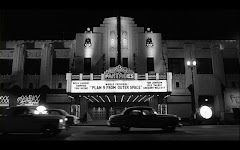
Firstly, you like the title there, huh? Yeah, I went there, there being puns-ville.
Now on to the matter at hand, last week in my review of Tess I commented that while I felt the film was solid overall, the direction lacked that certain Roman Polanski feel. This week I provide two examples of said Polanski feel and an interesting and entertaining dichotomy of how they were marketed to the public.
Exhibit A:
Repulsion (1965) trailer
Polanski's first film made outside of his native country Poland is also the first of a thematic series of film, sometimes referred to as "The Apartment trilogy", each dealing with sexually and/or emotionally repressed women (okay, in The Tenant it's actually a man, played by Polanski himself, who believes he's turning into a woman) who find themselves in solitude in their apartments that become their personal prisons where they slowly but surely become unhinged to the point of violence.
In the trailer for Repulsion, the distributor decided to downplay the methodical pacing of Catherine Deneuve's slow dissent into madness and advertise it more as a sexy thrill-a-minute romp complete with a jazzy drum beat you can dance to and that classic 60's drive-in era horror movie narration.
Exhibit B:
Rosemary's Baby (69) trailer
Like Repulsion, Rosemary's Baby, Polanski's first American film (produced by the kid himself, Robert Evans) depicts a woman in solitude slowly losing grip of her sanity in her increasingly claustrophobic apartment. Part horror/suspense but also very much part comedy, Polanski juggles issues as disperate as abandonment, the negative effects of career focus on marriage, generational distrust and of course, satanism! It's a wholly unique symbiosis and surprisingly, considering its an American studio funded horror film, so is the trailer. With the exception of the opening, the trailer contains no dialogue from the film as it intercuts between a pop-art collage of film highlights set to a psychedelic rock instrumental and a physical recreation of the famous poster image of a baby carriage on top of a hill, with a dread filled ambient score. Standing alone, it's the rare trailer that manages to achieve the level of an experimental masterpiece evoking the avant garde sensibility of the era, even if the purest in me wishes they found a way to incorporate the Krzysztof Komeda score and the "la la la" refrain.
So how do you like your Polanski "woman unraveling in her apartment" trailers? Arty or exploitative?
Thursday, January 31, 2008

Wednesday, January 23, 2008
Tess (1980, Roman Polanski)

Part of the 1980's Project
Seeing as we are in the midst of the annual Hollywood self-idolatry-fest known as Oscar season, it seemed a good time to shift gears in the 1980’s Project away from Z-grade slasher films (oh, there’ll be more of them in the future don't you worry) and take a look at the one 1980 Best Picture Oscar nominee I had not yet seen, Roman Polanski’s adaptation of Thomas Hardy’s book Tess of the d’Ubervilles. It’s title truncated to Tess which always caused me to confuse it with that Matt Dillon Disney horse-riding film, Tex, it’s the sort of film the movie industry likes to think it excels at: a prestigious adaptation of a classic piece of literature centered around an epic romance; and then pats itself on the back for making it and further rewards the accomplishment by giving it awards. But in this viewer’s mind, with a few exceptions, say Lawrence of Arabia, these prestige films hardly ever result in a transcendent piece of cinema. How many people today really ever discuss the merits and influence of Tess (unless they are in the middle of a project to see as many films from the year 1980 as possible, of course)? Or for that matter, a more recent example, The English Patient?
Call me cynical, but I cannot help but speculate that Roman Polanski’s involvement here is partially strategic. This was the first film he directed after fleeing America as a fugitive on statutory rape charges. Now a nearly three hour film based on a nearly hundred year old book would never be considered a strong commercial property, but it is the type of film that critics, and as mentioned above award givers, cherish, so a successful adaptation could salvage his career aspirations in a time of public crisis. He opens the film with a dedication to his slain wife, Sharon Tate, it was one of her favorite books and she recommended it’s prospects as a film to him. If you will allow me my further cynical strategic ponderousness, this could either be seen as a mea culpa to his wife for his dalliances after her murder or serve as a way of Polanski reminding deractors of his past status as a victim of horrendous circumstances.
But what of the film itself? Polanski’s run of films in the 60s and 70s proved him to be a filmmaker keenly attuned to the psychological mind, master of claustrophobic panache and possessing the rare ability to skillfully mix comedy and horror to the point where the lines between the two become blurred. I can see what initially drew Polanski to this material, it involves two of his favorite personal themes: the emotional scars and betrayal of a woman perpetrated by a supposed loved one and/or family and the false pretenses, secret lives and hypocritical nature of the upperclass. Still, while beautifully shot, it never truly feels like a “Polanski” film. The methods and style he employs are pretty much indistinguishable from how a less unique director would treat the material. Hell, for such a great director of violence, it seems an odd choice that the one murder scene and ultimate fate of Tess are both handled off screen (I must admit to having not read Hardy’s book, so perhaps this is in fidelity to the source, still their absence is a waste of one of Polanski’s strengths). The one major exception to the generic tendencies is the utter lack of sentimentality throughout, most notably in a scene where the infant child of Tess dies which is handled in the same matter-of-fact “shit happens” sensibility that accompanies all of Ms. D’Ubervilles travails. There is also a nice lack of using the score as an emotional substitute (at least until the last twenty or so minutes). Polanski’s work is solid and the lack of sentimentality appreciated, still I guess I wish, since he’s a favorite director of mine, that he would have put a more personal imprint on the project, such as Stanley Kubrick did with Barry Lyndon.
Tess’s most glaring weakness lies in its lead performer, Natassja Kinski, picked seemingly for her beauty and the fact that she and Polanski were having an affair (an affair that started when she was 14, damn Roman, dating a 14 year old while you’re fleeing the U.S. on statutory rape charges, I don’t know if I should condemn you for your emotional immaturity or applaud your balls. Didn’t you know any thirty year olds at the time?) than for her minor acting skills. She lacks the gravity required for the role leaving the viewer to deduce whether she suppresses everything internally or if Kinski is just incapable of conveying a variety of emotions. Whether she’s being raped, falling in love, having her desires suppressed, Kinski’s only expression is nonplussed (look at that poster, that‘s the expression she has for the entire film) as if she was concentrating mostly on being photographed. To her credit, Kinski would evolve into a better actor, most notably in Wim Wender’s Paris, Texas, but after watching Tess I feel the need to read Hardy’s book to get a complete sense of her character, not necessarily a bad thing, seeing how I should read more classic literature and all.
Kinski’s limp presence along with Polanski’s sometimes generic direction, prevents Tess from being a wholly successful venture. Speaking of the book, it must have had a major influence on the career Lars von Trier, since it’s basic plot elements: a young girl continually betrayed, forced to fight and scavenge for survival, oppressed and eventually hung once she finds true happiness; would pretty much serve as a template for the majority of his directorial output between the years 1986 to 2006.
After watching Tess, I came upon an article in the Los Angeles Times about a documentary based on the Polanski statutory rape trial that is playing at Sundance. The film, Roman Polanski: Wanted and Desired makes the case that Polanski while not an innocent by any stretch of the imagination, may have been a victim of a judge who was more interested in his own celebrity than a fair case. You can read the article here.
Thursday, January 17, 2008
The Year in Good DVD Covers
One of the features at my blog last year was “When Bad DVD Covers Happen to Good Movies", where I heap scorn upon the bad graphic designers of the world and the damage they impart upon quality films. You can find the three entries of that feature under the label Bad Cover Version (inspired by a Pulp song). Well, it’s a new year, so let’s start on a happy note, as the song goes: accentuate the positive. With that in mind, here are my five personal favorite DVD covers from last year, in no particular order, as well as five honorable mentions.
The Evil Dead (Ultimate Edition)

It may have taken an estimated 173 releases, but Anchor Bay finally did right by Sam Raimi’s horror classic. After covers featuring staged production photos of Bruce Campbell, comic book style artwork and the infamous Book of the Dead replication, they went back to basics and adhered to Colonel Mortimer’s Guide to Good Cover Artwork rule 1: “If it ain’t broke, don’t fix it”, utilizing the simple and effective New Line poster that’s most associated with it. Extra props for the added crease marks and rips.
Zodiac (Director's Cut)

Technically a 2008 release but the artwork made it’s way onto websites and this writer’s eye in 2007, so I am counting it. While I thought the original poster design of the Golden Gate bridge enshrouded in fog was great, at least before the first DVD release added the giant floating heads of Jake Gyllenhall, Robert Downey Jr and Mark Ruffalo, the special edition’s reproduction of one of the Zodiac killer’s letter to the San Francisco Chronicle is everything an alternate cover should be: striking, effective and specific to the film. Too bad they had to add the stamp with the film’s title, but I guess concessions to commercial practicalities must be made.
Ace in the Hole

The Criterion Collection is so reliable that this article could be entirely devoted to their work, instead I will choose my personal favorite, the cover of Billy Wilder’s neglected masterpiece, and one of his only commercial failures, the wonderfully cynical and dark Ace in the Hole where a newspaper reporter, Jack Tatum, played by Kirk Douglas, instigates and nurtures a human interest story when he stumbles upon a man trapped in a mine shaft and milks the man’s plight for his own personal and professional gain. In this day of the 24/7 news cycle where opinion and agenda trumps objectivity and non-stories like Terry Schiavo and the War on X-Mas are given national spotlight attention over more pressing matters, the film is extremely prescient. The cover perfectly captures the tabloid nature of one of Tatum’s headline features.
Flash Gordon (Savior of the Universe Edition)

I am a huge fan of the theatrical release poster, thus this release breaks Good Cover Artwork rule 1, however, I will concede that if there has to be an alternate cover, you should be commended for hiring comic book artist Alex Ross, known for his work on the Marvel mini-series Kingdom Come, to create a cover that perfectly conveys both the iconic heroic and campy cheese tendencies inherit in director Mike Hodges and screenwriter Lorenzo Semple’s homage/parody to the classic sci-fi serial that inspired the likes of Star Wars.
Fantastic Voyage

This year 20th Century Fox went deep in their vaults to release a bevy of 50s, 60s and 70s fare that ranged from war epics to spy chic to Irwin Allen produced sci-fi spectaculars to kitchen sink dramas. Wisely they decided to release these DVDs with their original vintage poster art in tact (plus the awesome old logo with the really big 0). Since I believe this era represent the renaissance of quality poster design, I had plenty of options, but the Fantastic Voyage cover that conjures memories of those old Disneyland attraction posters won out with its simple image concept and perfect execution. The raw emotion of its beautiful chief image, people dropping like tears from an eye, was homaged by Steven Spielberg in A.I. (perhaps incidentally, but knowing what a fan of 50’s genre films he is, I doubt it) during a scene transition where a close-up of Haley Joel Osment is juxtaposed over Jude Law falling into the sea, reflected in his eye like a tear.
Honorable Mention:
Army of Shadows

Criterion strikes again with another brilliant cover of another neglected masterpiece (well, until last year’s theatrical release at least) by a great director, Jean-Pierre Melville. Speaking of Pierres and Criterion, my friend Pierre sent me a link to this website of one of Criterion’s designer, Eric Skillman, check it out.
Voyage to the Bottom of the Sea (Global Warming Edition)

My second favorite 20th Century Fox classic cover, who needs the Finding Nemo Submarine Voyage when you can just stare at this all day? Points deducted for its painful attempt to tap into the zeitgeist with the Global Warming Edition label, not that I don’t believe in Global Warming, I just don’t think the destruction of our planet should be playfully exploited for the release of an old sci-fi film.
Robinson Crusoe on Mars

Criterion take three. I have no idea what this film is about, guessing some kind of retelling of the classic deserted island story only, uh, on Mars, but my interest is piqued based solely on this lovely painted cover. As Jerry Maguire once said “You had me at monkey in a space suit”, I am referring not to the movie character, but my zoologist buddy Jerry, whose second favorite catchphrase is “Show me the monkey!”
Skyjacked

Warner Brothers, like 20th Century Fox, opened its vault to release a bunch of B-movies this year. I love this very era specific cover with the repeating image of the silhouetted doomed flight. This also features one of my secret poster art guilty pleasures, the boxes on the bottom with stills of the all-star cast made famous by 70’s disaster epics and Superman sequels.
The Sergio Leone Anthology

An extreme close-up illustration of the side of a gunslinger, his sweaty hand approaching his weapon, the open landscape, his opponent off in the distance. Obvious for this compilation of Leone’s MGM Spaghetti Westerns (the Clint Eastwood/Dollars trilogy and the underrated Duck, You Sucker!)? I’ll give you that. Perfect nonetheless? Hell yeah!
The Evil Dead (Ultimate Edition)

It may have taken an estimated 173 releases, but Anchor Bay finally did right by Sam Raimi’s horror classic. After covers featuring staged production photos of Bruce Campbell, comic book style artwork and the infamous Book of the Dead replication, they went back to basics and adhered to Colonel Mortimer’s Guide to Good Cover Artwork rule 1: “If it ain’t broke, don’t fix it”, utilizing the simple and effective New Line poster that’s most associated with it. Extra props for the added crease marks and rips.
Zodiac (Director's Cut)

Technically a 2008 release but the artwork made it’s way onto websites and this writer’s eye in 2007, so I am counting it. While I thought the original poster design of the Golden Gate bridge enshrouded in fog was great, at least before the first DVD release added the giant floating heads of Jake Gyllenhall, Robert Downey Jr and Mark Ruffalo, the special edition’s reproduction of one of the Zodiac killer’s letter to the San Francisco Chronicle is everything an alternate cover should be: striking, effective and specific to the film. Too bad they had to add the stamp with the film’s title, but I guess concessions to commercial practicalities must be made.
Ace in the Hole

The Criterion Collection is so reliable that this article could be entirely devoted to their work, instead I will choose my personal favorite, the cover of Billy Wilder’s neglected masterpiece, and one of his only commercial failures, the wonderfully cynical and dark Ace in the Hole where a newspaper reporter, Jack Tatum, played by Kirk Douglas, instigates and nurtures a human interest story when he stumbles upon a man trapped in a mine shaft and milks the man’s plight for his own personal and professional gain. In this day of the 24/7 news cycle where opinion and agenda trumps objectivity and non-stories like Terry Schiavo and the War on X-Mas are given national spotlight attention over more pressing matters, the film is extremely prescient. The cover perfectly captures the tabloid nature of one of Tatum’s headline features.
Flash Gordon (Savior of the Universe Edition)

I am a huge fan of the theatrical release poster, thus this release breaks Good Cover Artwork rule 1, however, I will concede that if there has to be an alternate cover, you should be commended for hiring comic book artist Alex Ross, known for his work on the Marvel mini-series Kingdom Come, to create a cover that perfectly conveys both the iconic heroic and campy cheese tendencies inherit in director Mike Hodges and screenwriter Lorenzo Semple’s homage/parody to the classic sci-fi serial that inspired the likes of Star Wars.
Fantastic Voyage

This year 20th Century Fox went deep in their vaults to release a bevy of 50s, 60s and 70s fare that ranged from war epics to spy chic to Irwin Allen produced sci-fi spectaculars to kitchen sink dramas. Wisely they decided to release these DVDs with their original vintage poster art in tact (plus the awesome old logo with the really big 0). Since I believe this era represent the renaissance of quality poster design, I had plenty of options, but the Fantastic Voyage cover that conjures memories of those old Disneyland attraction posters won out with its simple image concept and perfect execution. The raw emotion of its beautiful chief image, people dropping like tears from an eye, was homaged by Steven Spielberg in A.I. (perhaps incidentally, but knowing what a fan of 50’s genre films he is, I doubt it) during a scene transition where a close-up of Haley Joel Osment is juxtaposed over Jude Law falling into the sea, reflected in his eye like a tear.
Honorable Mention:
Army of Shadows

Criterion strikes again with another brilliant cover of another neglected masterpiece (well, until last year’s theatrical release at least) by a great director, Jean-Pierre Melville. Speaking of Pierres and Criterion, my friend Pierre sent me a link to this website of one of Criterion’s designer, Eric Skillman, check it out.
Voyage to the Bottom of the Sea (Global Warming Edition)

My second favorite 20th Century Fox classic cover, who needs the Finding Nemo Submarine Voyage when you can just stare at this all day? Points deducted for its painful attempt to tap into the zeitgeist with the Global Warming Edition label, not that I don’t believe in Global Warming, I just don’t think the destruction of our planet should be playfully exploited for the release of an old sci-fi film.
Robinson Crusoe on Mars

Criterion take three. I have no idea what this film is about, guessing some kind of retelling of the classic deserted island story only, uh, on Mars, but my interest is piqued based solely on this lovely painted cover. As Jerry Maguire once said “You had me at monkey in a space suit”, I am referring not to the movie character, but my zoologist buddy Jerry, whose second favorite catchphrase is “Show me the monkey!”
Skyjacked

Warner Brothers, like 20th Century Fox, opened its vault to release a bunch of B-movies this year. I love this very era specific cover with the repeating image of the silhouetted doomed flight. This also features one of my secret poster art guilty pleasures, the boxes on the bottom with stills of the all-star cast made famous by 70’s disaster epics and Superman sequels.
The Sergio Leone Anthology

An extreme close-up illustration of the side of a gunslinger, his sweaty hand approaching his weapon, the open landscape, his opponent off in the distance. Obvious for this compilation of Leone’s MGM Spaghetti Westerns (the Clint Eastwood/Dollars trilogy and the underrated Duck, You Sucker!)? I’ll give you that. Perfect nonetheless? Hell yeah!
Monday, December 24, 2007
Christmas Evil (1980, Lewis Jackson)

Part of the 80's Project
If Christmas Evil (aka You Better Watch Out) teaches us anything, and really who doesn’t go to cheaply made Troma-produced 80’s horror films for instructions on how to live your life, it’s this: Be conscientious of where you engage in your fetishistic sexual transgressions, especially if you have children. If having your partner dress as Santa Claus while making sweet love to you is your cup of tea, all the more power to you, but please do it behind closed and preferably locked doors. This film depicts one such possible worst-case scenario for parents who do not adhere to this rule.
Harry, aged 8, his younger brother Phillip and mom sneak down the stairs and what to their wondering eyes should appear? Santa Claus himself leaving presents, filling the stockings hung with such care and pilfering the cookies and milk left out for him. When in bed, the younger but more world savvy sibling confides to Harry that it wasn’t really Santa, but dad in a costume. Ever the believer, Harry denies his brother’s cynicism, but has to see for himself, so he sneaks back down the stairs where he sees Mommy kissing Santa Claus, and Santa Claus kissing her back and not just on the mouth, if you catch my drift.
Cut to thirty some odd years later, Harry still possesses a child-like obsession with Christmas. His apartment is decked out in Christmas paraphernalia, when he shaves and the cream is across his face beard-like, he talks in character as Santa Claus (while we only see this once, I assumed it was a daily routine), works as a manager in a toy factory (get it?), and most distressingly, spies on the neighborhood children, keeping large binders journaling whether they’ve been naughty or nice. I was never a Psych major, but I have to think there’s something interesting Freudian-wise about a man who after seeing his mother in flagrante delicto with Santa as a child lives a life dedicated to the holiday. Unfortunately, as is par for the course with the film writer-director Lewis Jackson ignores any insights into Harry’s relationship with his mother post opening sequence or sexuality, preferring to focus on the voyeuristic angle with the kids, while disturbing on the surface, is not predatory.
If Christmas Evil teaches us two lessons, the second is: Beware of false charity! What eventually leads Harry off the precipice of sanity and into cuckoo land is when his bosses at the toy factory reveal that their charitable cause is actually a scheme to have the employees make all the donations and the corporation claim them as theirs (I may not have explained that well, but hey, neither did the movie!) on Christmas Eve of all nights! This bout of un-Seasonalness leads Harry to believe that he is, in fact, Santa Claus. He sneaks into the factory, steal toys and goes around giving them to the good boys and girls. Of course since this claims to be a horror movie, he also punishes the naughty people. His punishment ranges from the fairly innocuous, spooking out the bad neighborhood kid to the lethal: murder!
While the ingredients are all here for an interesting, entertaining or at the very least, since this is Troma, funny film, it’s actually a bit of a chore to get through. With two exceptions, the film is really drably shot. I consider myself fairly forgiving to cheaply made films, as Maniac displayed, you can still compose interesting shots with small budgets and on location filming. The two exceptions to the overall blahness of the cinematography are the scenes that bookend the film. The initial childhood scenes actually has expressive use of color and a fantastical look, as does the final scene, where Harry, being chased by the cops, drives his sleigh (actually a white molester van painted to look like it has reindeer on it) off a cliff where it doesn’t crash, but flies (to the North Pole?). This depiction of the separation of fantasy and reality elements using lighting, framing, etc. however is the only thing in Jackson’s film that is remotely cinematic.
The fact that the DVD Netflix sent me had a horrible transfer, looked like the source material was a VHS tape edited with scotch tape, didn’t help. It doesn’t appear that I got the 2006 special edition, but rather the 2000 extraless version, so if you want a better looking copy of a crappy movie, I suggest seeking out the former, which also includes a commentary between Jackson and John Waters. As far as Christmas slasher films go, this lands itself way below Black Christmas and Silent Night, Deadly Night and probably somewhere in between Silent Night, Deadly Night 3: You Better Watch Out and Black Xmas (the 2006 remake).
Hope you have a Happy Holiday, please don’t kill anyone…or feed your Mogwai after midnight!
Tuesday, December 4, 2007
When Bad DVD Covers Happen To Good Movies (Sort of) #3
Although I mentioned it in another context in the postscript of my Maniac review, I failed to evoke Black Christmas when discussing other horror films that open with a shot of the killer’s subjective point of view. An especially glaring omission since not only does it predate the other films mentioned (yes, even Halloween) but because since the age of 16 when I randomly discovered it in the horror section at the Wherehouse (Where? The Wherehouse!) , I’ve become slightly obsessed with the film and count it amongst my favorite films of all time, regardless of genre.
With the holiday season in full bloom, this month will mark my annual viewing of Bob Clark’s 1973 masterpiece, and hopefully unlike a few years ago when I arrived to a sold out sign, I will be able to see it theatrically for the first time at the New Beverly on December 18th when it plays with 1984’s Silent Night, Deadly Night in a Christmas slasher double bill. Perhaps after that screening I will discuss in further detail my appreciation for the film itself, but now to the subject at hand: the overall sucky-assness of Critical Mass’s Collector’s Edition DVD cover, circa 2003. There are several different DVD releases of Black Christmas with several different covers, but I am focusing on this one because it’s the DVD most leaden with extras, and it happens to be the version I own.

Apparently employing the same graphic designers assigned to create the many radio talk show host billboards in Los Angeles, the Black Christmas DVD cover is a mess of composition, fonts gone crazy and a lame tagline. Let’s start with the composition, I have no issues with the background shot of the sorority house that serves as the setting for the majority of the film, but egads, that foreground picture is horrendous, having seen the movie numerous times it took me a close inspection before I realized that the person in close-up is not in fact a victim of the invasion of the body snatchers or a burn ward patient, but rather the film’s first victim, suffocated by a plastic bag. What would someone who hadn’t seen the movie think? As for the mixed fonts, was that the result of a late night compromise between someone who wanted to go with an X-Files inspired glowing uncapitalized typewriter feel with someone who is a big fan of the shattered glass effect? In the future, someone has to just give up their pride and say, you know what bro, I’ll get the next cover. Lastly the tagline “’Twas the night before Christmas and all through the house, a creature was stirring…”, while not as lame in comparison to the other atrocities, it pales next to the original tagline which is still one of the all time greats: “If this movie doesn’t make your skin crawl…IT’S ON TOO TIGHT!”
BUT…and here’s where Critical Mass redeems itself, when you tear through the shrink-wrap, you have the option of reversing the cover where you can display the classic hand drawn poster containing a clear view of the suffocated victim in a Christmas wreath, with the original awesome tagline and the title in one continuous font throughout both words. Black Christmas was released under several different titles including Silent Night, Evil Night and the less festive Stranger in the House, but each release featured this classic design. While I have to slag Critical Mass for not making this the cover buyers will see displayed at their local DVD retailer, I do give them huzzahs for including it at all! This is the cover that prompted my initial rental and began my 15 plus year love affair with the film. If this was the cover when I was 16, I probably would’ve walked out with the latest Children of the Corn sequel instead.

Special Note: This is the third or fourth time I’ve mentioned Black Christmas on this blog, and the first time I didn’t reference last year’s crappy remake. Yay for me! Oh, whoops…
With the holiday season in full bloom, this month will mark my annual viewing of Bob Clark’s 1973 masterpiece, and hopefully unlike a few years ago when I arrived to a sold out sign, I will be able to see it theatrically for the first time at the New Beverly on December 18th when it plays with 1984’s Silent Night, Deadly Night in a Christmas slasher double bill. Perhaps after that screening I will discuss in further detail my appreciation for the film itself, but now to the subject at hand: the overall sucky-assness of Critical Mass’s Collector’s Edition DVD cover, circa 2003. There are several different DVD releases of Black Christmas with several different covers, but I am focusing on this one because it’s the DVD most leaden with extras, and it happens to be the version I own.

Apparently employing the same graphic designers assigned to create the many radio talk show host billboards in Los Angeles, the Black Christmas DVD cover is a mess of composition, fonts gone crazy and a lame tagline. Let’s start with the composition, I have no issues with the background shot of the sorority house that serves as the setting for the majority of the film, but egads, that foreground picture is horrendous, having seen the movie numerous times it took me a close inspection before I realized that the person in close-up is not in fact a victim of the invasion of the body snatchers or a burn ward patient, but rather the film’s first victim, suffocated by a plastic bag. What would someone who hadn’t seen the movie think? As for the mixed fonts, was that the result of a late night compromise between someone who wanted to go with an X-Files inspired glowing uncapitalized typewriter feel with someone who is a big fan of the shattered glass effect? In the future, someone has to just give up their pride and say, you know what bro, I’ll get the next cover. Lastly the tagline “’Twas the night before Christmas and all through the house, a creature was stirring…”, while not as lame in comparison to the other atrocities, it pales next to the original tagline which is still one of the all time greats: “If this movie doesn’t make your skin crawl…IT’S ON TOO TIGHT!”
BUT…and here’s where Critical Mass redeems itself, when you tear through the shrink-wrap, you have the option of reversing the cover where you can display the classic hand drawn poster containing a clear view of the suffocated victim in a Christmas wreath, with the original awesome tagline and the title in one continuous font throughout both words. Black Christmas was released under several different titles including Silent Night, Evil Night and the less festive Stranger in the House, but each release featured this classic design. While I have to slag Critical Mass for not making this the cover buyers will see displayed at their local DVD retailer, I do give them huzzahs for including it at all! This is the cover that prompted my initial rental and began my 15 plus year love affair with the film. If this was the cover when I was 16, I probably would’ve walked out with the latest Children of the Corn sequel instead.

Special Note: This is the third or fourth time I’ve mentioned Black Christmas on this blog, and the first time I didn’t reference last year’s crappy remake. Yay for me! Oh, whoops…
Tuesday, November 27, 2007
Maniac (1980, William Lustig)
.jpg)
Part of the 80's Project
Much like it’s main character Maniac is a schizophrenic film. Equal parts exploitative 1980’s slasher film, show-offy gorefest for the talents of its make-up artist extraordinaire Tom Savini, intimate character study courtesy of its star and co-writer, the great character actor Joe Spinell (probably best known for his roles as Will Cicci in the first two Godfathers and Tony Gazzo in the first two Rockys) and grimy cheap late 70s/early 80s New York independent art vibe (I’m thinking Abel Ferrara territory).
The first shot immediately reveals its intention to put the audience in an intimate relation with Spinell’s character, Frank Zito. The very first image is a shot of one of those beach pier telescopes you put a quarter into, the next shot is a subjective POV through the telescope’s lens at a couple frolicking about who will be the film’s first victims. A slasher film opening with the subjective POV of its killer is nothing unique, even as early as 1980, having been done beforehand most famously in Halloween (lil’ Michael Myers attack on his sister) as well as another 1980 film featuring the work of Tom Savini, Friday the 13th. However, we never get to follow Myers or Mrs. Voorhees having a post-murder schizophrenic conversation with their dead mother as we do in Maniac. In these scenes Spinell gives a fearless, personal and an intimate, some, hell most, would say uncomfortably intimate, performance. We always call actors like Charlize Theron “brave” for gaining weight, wearing bad make-up and not washing their hair for a couple of weeks in Monster, but Spinell’s turn as Zito earns that distinction because this is his actual body and he allows Lustig to film it in unflattering close-ups, in all his flabby stomach, sweaty balding head and acne scarred faced glory.
The first half hour or so of Maniac is structured thusly: Zito picks a target, follows that target around until they are in an isolated location and then kills them in a graphic manner (thanks to Savini). What’s interesting is Zito’s improvisational process of killing people. In the Friday the 13th sequels, Jason mixes things up from time to time, but he’s a machete man at heart, Myers usually sticks to the tried and true kitchen knife, but Zito is the type of guy who sees what he has around the house and says to himself “hey, that’ll do”, as a result we get strangulations, shotguns to the face, even a sword as murder methods.
An interesting aspect of this structure is that while he's stalking his victims we stay with Zito’s perspective, but once we get to the chase our perspective shifts, and we find ourselves in the victim’s shoes, not knowing when or how Zito will strike. I’m not sure exactly whom we are to sympathize with. We have spent more time with the killer and know him more intimately, but then again, he is a maniacal killer, I mean it’s in the title! But due to the nature of his random victim selection there’s less character definition with them than we’d have if we were introduced to them earlier, like the typical camp counselor in a Friday film, and yes, that is the first and only time a Friday the 13th movie will get credited with any form of character development.
After awhile it must have occurred to Lustig, Spinell and co-writer C.A. Rosenberg (who has no other film credit, is it a pseudonym for Lustig or Savini?) that 90 minutes of Zito going around killing someone and going home and having conversations with his dead abusive mother would seem repetitive and go nowhere. So we are then introduced to a fashion photographer who will become Zito’s “love interest”. This part drags the film down, not because there’s no murder, but due to the fact that a.) it’s more than a little unbelievable that this trendy, beautiful, popular woman would have any romantic interest in Spinell, even when he’s playing “normal” he still looks like Spinell and has more ticks than Norman Bates, and b.) the filmmakers seems indifferent to these scenes. Spinell saves most of his acting energy for the schizo scenes, Lustig shoots them boringly, saving his savvier cinematic tricks for the suspense and kill scenes, and Savini is not around. Eventually Zito decides that he’d rather be a serial killer than an arty New York hipster and while it’s a commendable choice, his attachment to her and the fact that he attempted any sort of an emotional relationship with a woman who is not his dead mother ultimately costs him.
Despite borrowing liberally from not only Halloween, but also aspects of other horror classics such as Psycho (killer channeling and conversing with his dead mother), Carrie (let’s just say hands pop out a grave at one point) and Dawn of the Dead (in a dream sequence, Zito gets torn to pieces by his zombified victims, where Savini pays tribute to one of the great horror make-up artist, one Tom Savini), the sum is greater than its parts. If you’re a fan of the genre, and have a strong stomach, Maniac is definitely worthy.

Extra Spoiler Type Comments Below:
Maniac receives runner-up honor on my list of idiotic work by police officers in a horror movie climax. The winner is of course Black Christmas (don’t make me have to specify the original) where after Olivia Hussey survives the traumatic experience of being stalked and nearly killed by her boyfriend (or was it?) everybody leaves her asleep alone in her sorority house bed. With, it turns out…the real killer…duh duh dun! Well in Maniac, after Frank unsuccessfully tries to kill his fashion photographer girlfriend he returns to his apartment, has the aforementioned dream that he’s torn apart and apparently dies from self inflicted stabbing wounds. It turns out his lady friend didn’t cotton to being nearly murdered and ratted him out, so two Serpico wannabes bust into Zito’s apartment only to find him dead (or is he?). So what do they do? Shrug and leave. Of course after they leave, it’s revealed that duh duh dun…he’s still alive! Seriously guys, I know its pre-cell phone, but you have a CB radio in your car, right? The correct procedure, I am guessing, is not going “well, shit happens”, but rather having one of the cops stay in the apartment as the other goes to contact a coroner or one of them CSI guys. Hell, if you don’t have a CB radio, find a goddamn payphone, man. Its 1980, they still exist, plus you just found the killer that has been plaguing New York for a few months, I’m sure your boss would accept a collect call.
I guess what the Strokes said about New York City cops in that one song was pretty spot on.
Extra Special Random Fun Fact
While this was definitely Joe Spinell’s biggest role of 1980, probably biggest role ever, it was one of 8 films and 1 TV movies featuring a Spinell performance in the year.
Tuesday, November 13, 2007
Trailer of the Week: Colonel Mortimer’s Policy Trailer

If you attended a movie at a Syufy theatre (better known as the Century Theatres) sometime in the 1980’s or 90’s you no doubt remember the floodlight policy trailer that preceded every film. Movie-theatre-going-wise, I was lucky enough to grow up in San Jose, CA and pretty much the entire film going of my formative years were at their landmark “dome” cinemas, Century 22, 23, 24 and the crown jewel of them all, Century 21, the great single screen theatre that was also the first of the Syufy chain to carry the name “Century”, christened as such because its futuristic design (circa 1964) was heralded as be the type of theatres that one would presumably expect to be the norm in the 21st century (unfortunately that was not to be the case).
Sometime in the early 90’s the Syufy corporation officially changed it’s name to “Century Theatres” since pretty much every post-Century 21 was subsequently labeled as a “Century”. With the name change, the popular floodlight policy trailer was scraped and replaced with something more non-descript.
What makes the floodlight trailer stand out is the interaction it inspired amongst loyal crowds. On YouTube it is labeled: The Syufy Clapping Trailer. And yes, clapping is what I associate most of all with it. Psyched film fans witnessing the further adventures of Luke Skywalker, James Bond and Indiana Jones would form a cacophony of claps to its syncopated beat. There even floated around rumors and stories of people who would stand up to simulate the floodlight movements with their arms (though I never personally witnessed or participated in that particular activity). I remember attending a matinee of A League of Their Own with my mother and even a crowd of middle-aged soccer moms clapped along (to be completely honest, at the time I thought it was kind of lame that adults had so blatantly co-opted “the clap” that their children, if not invented, perfected, if the phrase “jump the shark” existed at the time, I’m sure I would have applied it to the events of that summer afternoon in 1992).
I realize that this posting originates from a place of nostalgia, but it’s not necessarily just for the carefree days of my youth or the kitschy retroness of the trailer’s design, but rather a time when film going represented something a little more special: a sense of community, something that has been lost a lot what with the ever-decreasing quality of Hollywood filmmaking, crowds who seem more interested in their Blackberrys than the film they paid to see, and the fact that movies open so wide that on any given day a film can play on as many as 10-15 screens per town. Sadly, the Syufy/Century theatre is partially responsible for this, opening multiplex after multiplex and cutting some of it’s domes in half to increase screening capabilities (the 23, 24 and 25 included) instead of focusing on larger one or two screen theatres, resulting in the abandonment of the quality of the theatres and their designs in the process.
Last year, Cinemark bought out the Century Theatre corporation with one sole exception, the three original domes and their drive-in screens which will revert back to operating under the Syufy name. And for discerning San Jose movie fans, there still is no better place to see the latest hit films. Now let’s hope they bring back the floodlight policy trailer!
Thanks for reading the long preamble, it’s now time for today’s featured entertainment. So sit back, relax, and enjoy the show!
Monday, November 5, 2007
The Changeling (1980, Peter Medak)
 Part of the 80's Project
Since it's been about a month and a half since I actually watched The Changeling, I am going to do something a little different here, instead of forming some kind of cohesive review (not to imply I've ever written a cohesive review) I am just going to go through notes I took during and after the film and just bulletin point my thoughts. Act like it's one of those progress reports your boss makes you waste time drafting, just try to refrain from coming into my blog and shooting the place up like you've been strategically planning the last fifteen years.
SPOILERS AHOY! (*especially the ending!*)
* General plot synopsis portion: George C. Scott plays a classical pianist whose wife and daughter die in a car accident. He moves from New York to a quiet Washington (Pacific Northwest, not District of Columbia) town where he teaches music at a university (and is wildly popular for some reason, like 500 kids crash his first class, I guess Washington is wild for their mourning classical pianists) and moves into an old house with a mysterious history. Creepy stuff starts happening, stuff like for an example an antiquated wheelchair appears out of nowhere and moves by itself and a rubber ball very dramatically falls down the stairs. Ends up this house is haunted by the spirit of a dead boy. Through copious amounts of research and mediation with a spiritual we discover that the boy’s father stood to inherit a significant sum under the one guideline that it would actually go to the boy, but since this kid suffered a fatal disease one night the father drowned his son, secretly buried him and hightailed it to Europe with no one ever the wiser, in Europe he adopts a similar looking kid who he brings back to America a few years later and cha-ching gets the inheritance. In the present day, the adopted son has become a Washington state senator and one cannot help but speculate his first initiative in office was some kind of inheritance reform. George C. Scott decides to stay at the house and help the kid gets some form of vengeance (we'll discuss this a little later), but it kind of comes back to bite him in the ass since after the boy's vengeance is satiated, the house burns down. Hope Scott had insurance! (I did say there would be Spoilers, right?)
* The film begins with a great opening sequence and title card. George C. Scott's wife and daughter are killed in an auto accident in the snow while Scott watches helplessly in a phone booth. Close-up on Scott's grieving face...and...FREEZE FRAME...The Changeling. What I especially like about the film is it‘s non-explotative nature concerning the death of Scott‘s family, evidenced by the fact that his assisting the child offers him no emotional resolution or cathartic reconciliation with the spirit of his deceased loved ones (a la this year's 1408), obviously their death inspires him to help the boy but that’s more a character trait than a plot contrivance.
* The fact that this film continually pops up on various "Scariest Movies of All Time" list is due to the deft direction, sound design and quiet atmosphere director Medak--a journeyman director who resume includes on anarchistic British satire (The Ruling Class), many television credits (ranging from Tales From the Crypt to Seventh Heaven to Magnum P.I.), neo-noir (Romeo is Bleeding) and one of the crappiest films in the history of films (Species 2)--employs. The house is quiet and so is the film, until you know, shit goes down, Medak effectively mines suspense by contrasting the silence and Scott's character classic piano playing with loud disruptive sounds. Today it's a cliche, I know, but it’s always effective when done right. Too often filmmakers hijack their own suspense by wallowing in poor sound design filling what should be quiet moments with lame rock songs that serve only to attempt to sell the soundtrack (this is a Miramax specialty) and avid farts editing style (copyright Vern), Saw and those horrible Michael Bay produced remakes being primary offender.
* The best scene of the film occurs when a psychic comes to the house to communicate with the spirit. The acting and direction remains contained. Nowadays, the woman would be portrayed like a Zelda Rubenstein type kook and the scenes where she communicates with the spirit would be over-edited with flashes of some ghostly images too you know, freak you out. Instead we get a nice drawn out scene which is treated not like a crazy event, but rather a woman nonchalantly just doing her job, sure her job involves being in a trance like state and communicating with the dead, but hey to her, it's just another fucking Tuesday.
* But what I find most interesting about The Changeling is that the ghost of the kid is actually a bit of a jerk. I’ve already mentioned how after George C. Scott helps the kid out by finding his skeleton and confronting the senator/impostor he repays him by burning down the house. “Thanks, bud, that'll be the last time I ever try to assist spirits of murdered children.” But the whole act of vengeance on the senator/impostor is kind of petty. Yeah, it sucks that this guy got your fortune and is now a senator, but hey, money alone didn't ascend him to his position, it's mentioned that he's served several terms, so hey, people liked him enough to re-elect him. Hell, the senator doesn't even know the truth about his past until the film's climactic scenes. So he ends up dying for the sins of his father, only it wasn't really his own father, but his adoptive father. On the flip side he had a fairly long and prosperous life and was able to avoid any Dickensian-like orphange abuse and calling everybody "guv'ner" all the time. All in all, the measure of payback perfectly gels with what the five year old mindset would consider fair.
This wasn't really much shorter than most of my reviews was it? At least I still have the lack of cohesion thing going on.
Subscribe to:
Posts (Atom)