Sunday, August 28, 2011
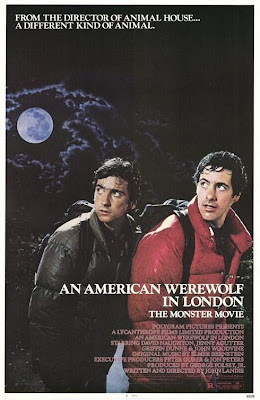
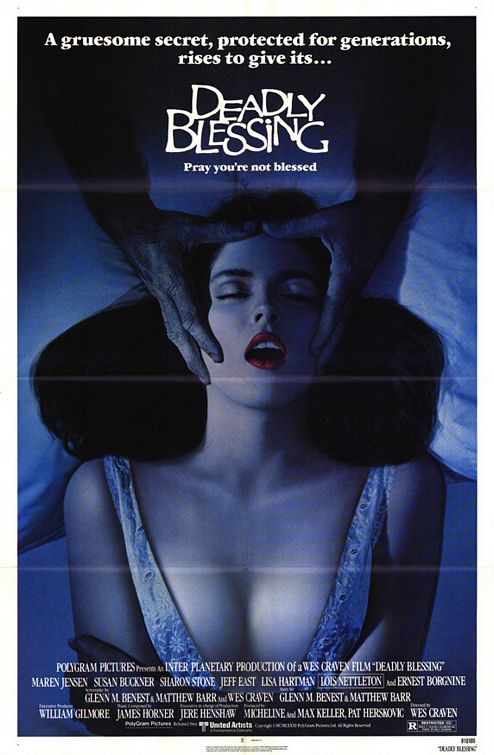
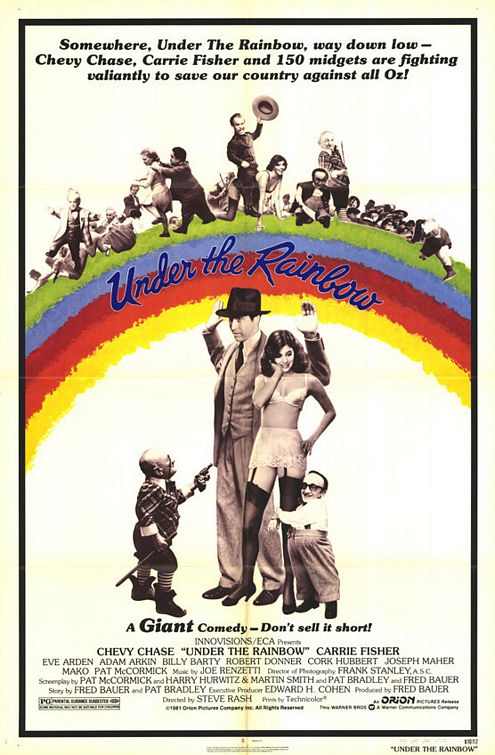
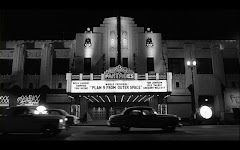
Posterized: Now Playing August 1981
Monday, August 22, 2011
The Quixotic Foibles IV: The Quest for Peace (of Mind)
The first part of my quixotic journey to attempt to get through all my unwatched DVDs and Blu-Rays is here, part II here and part III here. Funny, I thought I'd really cut down on purchasing, but alas, that is not the case. Some explanation, since the last update I've had a birthday, went on one rampant Swapadvd trade session, there was one of those Barnes and Nobles' Half-Off Criterion titles sales, as well as a Amazon's Half-Off Criterion titles sale..not to mention, uh, Criterion's Half-Off Criterion titles sale, and two or three Pasadena Swap meet visits.
So the foibles keep getting quixoticer, I guess.
Here's the DVDs or Blu-Rays I actually did make it through (I will link a review if I have written one):
Wednesday, August 3, 2011
The Dogs of War (1981, John Irvin)

In an early scene in The Dogs of War (1981, John Irvin), mercenary soldier Jamie Shannon (Christopher Walken) opens the refrigerator in his rundown one room New York apartment to reveal its major contents: a six pack of Budweiser and a small handgun. A few moments later, we see that Shannon has another gun hidden in his nightstand. These little touches are indicative of the detailed study of the world weariness and paranoia of a man who has dedicated his life to battle. The type of man who after his cover (as an ornithologist) is blown spying on an Idi Amin like dictator in the small (fictional) African nation of Zangaro and is beaten within an inch of his life, does not bat an eyelash at returning to the nation and expelling their leader, not as a revenge ploy, but rather it’s a job, nay, it’s his nature. Sure he may talk about living the quiet life in Colorado to his estranged wife (JoBeth Williams), but she’s not buying it, and neither is he probably.
Like the last film I reviewed as part of the 1981 Project, Walter Hill’s Southern Comfort, Dogs of War deals with the fallout of the Vietnam War without ever explicitly referencing the actual conflict. My blogging friend, Leopard13 (of It Rains…You Get Wet) made a salient comment about how in 1981, with the newly elected Ronald Reagan, a sense of wanting to ignore the pessimism that divided the country during the 60’s and 70’s was evident, to the point that it subconsciously led people to ignore art that dealt with Vietnam, even if, like Southern Comfort, it was on a more metaphorical level. Ironically, by the mid 1980’s, cinemas would be inundated with films (and even the television series,Tour of Duty) that focused specifically on the war itself, including the Oscar winning Oliver Stone film Platoon (John Irvin would contribute to this wave with 1987’s Hamburger Hill), but I guess that’s the nature of people’s statute of limitations on devastating and divisive affairs (probably why it took five years before any films addressing the September 11th attacks were produced and why films set in Iraq constantly fail box office wise, but I digress). The film though that Dogs reminded me most of is another Best Picture winning film, Kathyrn Bigelow’s The Hurt Locker. Like that film, Dogs is a character study of a man for whom war has become not only his definition, but an addiction. And like any addict, they resist the urge and rebel, and are not blind to the fact that they’re basically a pawn in a larger machine. There’s a nice differentiation between two of his mercenary gang that Shannon attempts to recruit for the Zangaro mission. Terry (an early role for future Al Bundy, Ed O’Neill) is happy with what he earns from his job as a mechanic and gives a flimsy excuse related to the health of his sister for sitting this one out, while Drew (Tom Bergenger) quickly joins in despite his wife’s pregnant state, telling Shannon “I don’t want to stick around and see her get fat”.
Adapted from a Frederick Forsyth novel by screenwriters Gary DeVore and George Malko, the film's narrative structure is split into distinct components, with each given its own identity by director Irvin and cinematographer Jack Cardiff (who himself has directed a mercenaries in African film, 1968’s Dark of the Sun). After a tense and exciting opening tease that shows Shannon and his mercenaries escaping from a mission in Central America, the film shifts to America, where as previously mentioned, Shannon attempts to adjust to the tedium of everyday life. The next section is his undercover work in Zangaro which ends with his torture, then back to America and an attempt at the reconciliation with his wife. The next section, the recruitment and procurement of weapons and travel to Africa, has the feel of a John LaCarre spy novel, emphasizing the unsexy wheeling and dealing side of the process. For the final act, the invasion, we return to the exciting action tropes from the opening scenes. With a lot of globetrotting this narrative technique gives the film a unique spy/war film hybrid sensibility.
Director John Irvin will never be confused for an auteur by any stretch of the imagination (I just recently watched his other 1981 release, Ghost Story which is awkward and lacking of any tone), but he rises to the occasion here with tight pacing that manages to fit in a bunch of small character moments, and an epic feel for a film that only runs about 105 minutes. There may be a few dramatic moments that don’t carry the oomph they’re supposed to, but those are the exception. And Irvin excels in the film’s final fiery violent battle sequence which manages to portray a chaotic scene clearly to the viewer. The violence is loud and quick, belying Irvin’s experience as a War cameraman (as much as a person whose never been in battle can judge the verisimilitude of it).
I am not sure what its reputation was upon release, but I don’t really come across people discussing The Dogs of Warmuch today. It’s not an impeachable classic, and Walken’s performance is very similar to his work in 1978’s The Deer Hunter, but it’s sneakily powerful, as it not only addresses the role of a soldier for life, but the consequences when said soldier questions the logic of the War Machine. Sure, the African country and leader in the film may be faux and the organization Shannon works for is never specified, but it doesn’t take much to delineate the actual persons and places being protected here.
Tuesday, July 26, 2011
Posterized: Now Playing July 1981
Sunday, July 24, 2011
Trailers of the Moment: Drivin'
As a bonus, here's the trailer for what is currently my most anticipated film of the year, Drive, which netted it's director, Nicholas Winding Refn the Best Director award at this year's Cannes Film Festival, and me being so excited is saying a lot seeing how I wasn't even a fan of the only Refn film I've seen to this point, 2009's Bronson. But the buzz from Cannes was amazing and combined with a solid cast featuring Ryan Gosling, Carey Mulligan, Bryan Cranston, Catherine Hendricks, Ron Perlman, and apparently a great evil turn by Albert Brooks (!) and a stylistically direct crime story cut from the same cloth as the Hill film which I treasure, have amped up my desire to see this one ASAP.
Tuesday, July 19, 2011
Southern Comfort (1981, Walter Hill)
Part of the 1981 Project Deliverance, the 1972 John Boorman directed adaptation of James Dickey’s suburban male survivalist tale, became one of those films like Jaws or Halloween that saw an influx of imitations following in its wake. Itself a modern day take on the Richard Connell’s story “The Most Dangerous Game”, the appeal of the basic template is letting a cross section of men (educated, gym rats, chubby) and pit them against locals (mostly from the Southern part of the United States) who abide by more antiquated and simpler instincts and the elements. Out of all these Deliverance followers, one of the best is Walter Hill’s Southern Comfort. The basic framework is there, but thoughtfully tweaked through the culpability of the “protagonists” themselves, and their military training, which provides a subtext of a microcosm of the clusterfuck that was Vietnam.
It’s Louisiana 1973, a National Guard troop featuring a bevy of great characters actors like Keith Carradine, Powers Boothe, Fred Ward and TK Carter, is being lead on a routine trial run (aren’t they always routine?) by their captain (Peter Coyote) in the bayou. Armed with heavy artillery loaded with only blanks (representing impotence…a key subtext of the film) yet completely under prepared, even for a trial run, they encounter a river sans any means of crossing. Seeing some docked canoes, they decide to abscond with them, figuring the importance of their mission (reminder: a trial run) far exceeds any other possible purpose. Mid-way through their trip, the owners of the vessels, bayou dwelling Cajuns, return, and not knowing any details, yell and scream like anyone who catches a thief in action probably would. A National Guard member responds not with explaining words but by firing a loud round of blanks from his machine gun. The Cajuns respond by shooting their guns, the type with actual bullets in them, and murder one of the Guardsmen. Tensions escalate as the troop is obviously lost in an unfamiliar land and begin to unravel psychologically.
Set while the conflict in Vietnam was still raging, the film serves as a microcosm for the myriad of circumstances (i.e. generally being lost in unknown land, unprepared and undermanned) that led to the malaise that was America’s involvement in Vietnam. Primary being a complete and utter inability to communicate, how could one expect the lines of communication to persons in another continent, when even native Louisianans cannot understand one another based upon dwelling location? The film also deals with a very American sense of entitlement as evidence in the film’s instigating moment, the taking of the canoes. The majority of the men don’t let their artillery impotence prevent their machismo impulses, revealed when coming across a Cajun in the bayou (the wonderful character actor Brion James), unable to deduce with certainty his involvement, but guilty by association, the men convince themselves to take him hostage, and one particular maverick amongst them destroys the man’s humble home.
Hill and his co-screenwriters Michael Kane and David Giler do a wonderful job creating realistic and fully realized characters that also serve as symbolic archetypes of masculinity. They are aided in this cause by a game cast of hungry actors who bring a verisimilitude to their performance that increases the already intense atmosphere. Every character is flawed in one way or another, even our alleged “good guys” Charles Hardin (Boothe) the fish-out-of-water member of the team, he’s from Texas, who slowly begins to give into his more paranoid thoughts, and Spencer (Carradine) who maintains a lackadaisical disposition even under the most inappropriate circumstances. As the journey home extends, all the men grapple with such issues as an inability to lead, catatonia, racism, and their most psychotic impulses coming out from beneath the surfaces.
This was the fourth in what is quite an amazing streak of five great films over the course of five years for director Walter Hill (preceded by The Driver, The Warriors, The Long Riders (my review) and followed by 1982’s 48 Hrs.), and his assuredness oozes from the screen. Smartly, he makes the decision to never give the viewer a clear shot of the Cajun persuers, so when the surviving members of the troop come across their potential nemesises, we are in the same position as they are: uncertainty. Hill imbues a strong sense of atmosphere through location shooting and is as skilled at manufacturing suspense as any of his peers. Ry Cooder provides an appropriately spiced score that is both minimal and effective.
Sunday, July 17, 2011
Trailer of the Moment: I Survived Carmaggedon Weekend Edition

The digital sign on the 134 informed me this afternoon that the 405 is officially reopened, and Los Angeles has survived it's closure, whose inconvenience was considered so severe and heinous it was named after a Michael Bay film, relatively unscathed. But before you hop in your car to celebrate the returning integration of LA locales, let's take a look at the trailers for two films which may give you pause, because they suggest some truly dangerous vehicular possibilities.
Duel (1971, Steven Spielberg)
The first feature length film directed by Steven Spielberg, scripted by the great genre author Richard Matheson (I am Legend) originally aired on television as a Movie of the Week, where it was so popular that it received a theatrical release in Europe and eventually in America. I notice a copyright date of 1972 on the trailer, so I am guessing this is from it's European release.
I know some might find this shocking, but after Jaws this is my favorite Spielberg film (emphasis on favorite over best). There's a basic primal aspect to the story and filmmaking that I really respond to, putting an everyman in a senseless terror ride. The primitiveness extends to the narration free trailer whose sixty seconds are action packed. Have fun counting the number of times the title of the film appears in this minute long trailer (I counted nine)!
The Car (1977, Elliot Silverstein)
The result of combining the ingredients of both Spielberg suspense films Duel and Jaws (the introduction to the lead, James Brolin, even features him being woken up a la Roy Scheider's Brody...but he has two daughters instead of two sons, so completely different) with a sprinkling of the devil based horror sub-genre that rose in the wake of The Exorcist (the film even opens with a quote from Church of Satan founder Anton LeVey), 1977's The Car is one of those enjoyable ridiculous films that were common in the 70's or 80's when studios quickly attempted to jump on a popular trend.
Similarly to the Duel trailer, The Car trailer heavily showcases the action sequences, but this time with a narrator informing us of the possessive power within, who ponders "what evil force drives...The Car!" (too bad they didn't get Percy Rodrigues) and the bellowing audio symbol of it's destructive urges...the ever threatening horn honk!
If you survived this weekend and find your appetite for vehicular mayhem whetted after these two films, I also recommend Race with the Devil (1975, Jack Starrett) where satanic cults chase after Warren Oates and Peter Fonda who are trying to enjoy a vacation in their Winnebago and Christine (1983, John Carpenter), the Stephen King adaptation where a boys first car has deadly impulses.
And in the meantime, watch the roads!
Thursday, July 14, 2011
Return from Vacation
I would like to apologize for another rather lengthy hiatus from my blogging duties here. The combination of a short vacation to Portland, Oregon, the sunny (but pleasantly not oppressively hot) Southern California weather, and being stuck in jury duty for 3 days before dismissal (being married to a Public Defender has its privileges) led me to take a lax attitude towards updating the site or even surfing the web in general.
This was my second trip to Portland in the last decade (third visit there in my life, counting when my family visited my aunt and uncle when I was five years old), and I have to say, it’s my kind of town. Granted, we were blessed with beautiful weather that fluxuated between the mid-70s and low-80s the entire time, which I realize is a stark contrast to the eight plus months of rainfall the Pacific Northwest city is known for (my last visit was during the month of December, so I definitely have experienced that), but I imagine the city’s walkability and reliable public transportation certainly would provide respite during more inclement days.
While some residents (especially those that write for the weeklys) have some of that “I live in a great city superiority complex” thing going on that drove me a bit batty when I lived in San Francisco, that’s forgivable for a place where record and book stores still thrive, good food and drink (especially DRINKS) are not only appreciated but affordable, a large contingencies of movie theatres serve beer and/or quality meals, and where despite being a bastion of left of Nader liberals (of which I tend to fall on the political spectrum) there’s no sales tax!
I thought I’d share some of the entertainment highlights and purchases of my trip with you.
Movies
My wife and I caught two films at two separate movie theatres while vacationing. The first was Werner Herzog’s captivating documentary Cave of Forgotten Dreams, one of the only 3-D films of the modern era where the extra dimension was actually necessary, providing texture and scope, at the Living Room Theatres. The theatres seats are comprised solely of barcalounger/couch style material with a table between each seat. We had a later lunch that afternoon so we didn’t order a meal, however, spying on other attendees’ food showed a wide assortment of fine cuisine, in addition to a full bar drink menu and Espresso bar (I had an Americano). We did order some popcorn, which was brought to our seats in an actual ceramic bowl. Ooo la la, indeed. The price was $12 for each ticket, which is a little pricier than normal, but still cheaper than the Arclight on a weekend night.
The next movie we saw was at the Laurelhurst, a theatre I visited the last time I was in Portland. It’s a small, independently operated, neighborhood theatre that used to be one large theatre that was cut into about six screens decades ago. In addition to normal concession items, they also make fresh pizzas and have a tap with a selection of a half dozen beers. The programming is pretty much second run independent fare, and admission for a 4:00 screening was only three dollars! Two of the best films of the year so far were playing when we went (those would be Meek’s Cutoff and 13 Assassins), but my wife and I caught the one repertory screening they had of the Michael Cimino directed, Clint Eastwood/Jeff Bridges starring cult classic, Thunderbolt and Lightfoot. The print was not in the best condition and the projector bulb was wearing out, making everything darker than it should be, but for the price of admission and the chance to consume a beer during a theatrical screening, I won’t complain too much.
Books
The world famous Powell’s Books takes over a block of space, and is a bibliophile’s paradise. In addition to the main store, there are several smaller stores throughout the City, and for those that want to give business to a smaller entity than Amazon, you can order stuff from their website and have it shipped to anywhere. During the two or three hours I shopped there I actually spent so much time in the Crime Fiction and Film related rooms that I barely scratched the surface of the actual Literature room. Oh well, next time.Here’s my haul:
For those who cannot see all the titles too well, here’s the list of what I purchased:
Norwegian Wood-Haruki Murakami
The Score-Richard Stark (Donald Westlake)…which I already read in two days, finishing on the flight home
Fatale-Jean Patrick Manchette…which I finished yesterday during breaks at jury duty
Lady Killer-Ed McBain…the first McBain/Precinct 87 book I’ve ever purchased, anyone recommend a good starting point for this series?
The Deep Blue Good-By and the Dreadful Lemon Sky-John D. MacDonald…looking forward to entering the world of Travis McGee after hearing so much about the series
Shock Value-John Waters
Melville on Melville…one of those interview series with famous film directors, this one with Army of Shadows/Le Samoraui auteur Jean-Pierre Melville
The Locked Room-Maj Sjowall and Per Wahloo
A Swell Looking Babe-Jim Thompson
Child of God-Cormac McCarthy
Swag-Elmore Leonard…I read Stick earlier this year, and didn’t realize that there was another book chronicling the character Ernest Stickley until reading the back cover
Button, Button and Other Stories-Richard Matheson…now I can finally see if I was right in assuming that the recent Richard Kelly film adaption of the cover story (The Box) starting going off the rails once Matheson’s story concluded and new strains were added
I also picked up those two swanky t-shirts, and my wife found several books of interest for her that are not included in that photo.
Records
Risking the possibility that we would have to check luggage (which we actually did not…I packed lightly), my wife and I purchased the following LPs at Jackpot Records, a local independent record chain. We had our first and only celebrity sighting there, Carrie Brownstein of the band Sleater-Kinney and the Portland centric sketch comedy show Portlandia, was shooting something in front of the store, possibly a segment for a future Portlandia episode?
Otis Redding-Tell the Truth
Alice Cooper-Welcome to my Nightmare…for $ 2
Donald Byrd-The Cat Walk
Soft Machine-4
Led Zepplin-II…fun fact: though I am a pretty large music fan, this is the first Led Zeppelin album I’ve owned in any format, and I only paid a buck for it!
The Fugs-It Crawled Into My Hands, Honestly
Miles Davis-Filles De Kilimanjaro
Food
Honestly, considering we ate out pretty much the entire trip (save for a picnic at the Rose Garden), there are too many fine establishments to mention them all in this post. But one I would really recommend to any Portland residents or visitors is a place called Evoe. It is connected to a small Italian grocery store, and there’s only two tables and counter space. The chef, Kevin Gibson, used to work at an upscale restaurant, but feeling disillusioned with the scene opened this smaller place of his own. Everything is made of fresh organic ingredients, and if you sit at the counter, right in front of your eyes. We had a small lunch comprised of a selection of pickled items as an appetizer, a salad with thinly cut slices of artichoke as the base, and a wonderful dish of fresh peas on top of toast with a béarnaise-esque sauce. And all for about twenty dollars!