Tuesday, July 28, 2009

MIA on DVD: Machine Gun McCain (1970, Giuliano Montaldo) (aka Gil Intoccabilli aka The Family)

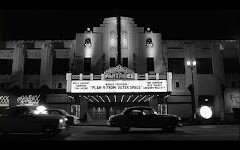
Steely. No nonsense. Blunt. Lethal. These adjective describe both Hank McCain (John Cassavetes), a mob enforcer and his weapon of choice, a machine gun. McCain, whose determined independence lands him in the middle of a mob power struggle when he’s freed from jail and prompted at his son's, who he’s only seen twice in his life and has no fatherly compassion for whatsoever, behest to take part in a Las Vegas casino heist. A heist he decides to take on by himself when news of it ruffles the mob establishment’s feathers.

Machine Gun McCain an Italian production, shot in America (mainly Vegas, Los Angeles and San Francisco) was directed by Giuliano Montaldo, who brings the stylistic flair and workmanlike quality of European exploitation to American soil. It's always intriguing to see America through the eyes of foreign directors, and you can sense Montaldo’s wonderment in the way he films the neon lights in the bars of San Francisco and the Vegas strip as well as the richness exuded in the criminal aphorisms. The film is reminiscent of such work as Sergio Sollima’s Violent City (aka The Family aka Citta Violenta) in that regard as well as in casting notable English speaking actors as the lead (and then dubbing their voices for European audiences and vice versa for the European actors).

While Sollima’s film may be the better, more skillfully crafted piece from a cinematic and narrative standpoint, the casting in McCain is superior and deepens what on the surface are narrowly sketched archetypes. In addition to Cassavetes, the film stars Britt Ekland, Gabriele Ferzetti (of Once Upon a Time in the West), Peter Falk and Cassavetes’ wife and frequent co-star Gena Rowlands. Rowlands’ casting as an old flame of McCain’s whose fortune and association with the mob dwindled as she aged, in particular is potent, as the relationship between husband and wife results in Cassavetes’ characters only real emotional display in the entire film. One can even draw a parallel between Cassavetes’ fiercely independent McCain and his work as an independent filmmaker, both caught somewhere between the establishment (the mob and/or mainstream movie studios) and the up and comers whose work he influenced that are looking to overtake him in the game he created (the son and his posse who he tellingly refers to as “Hollywood fags” and/or the 60’s/70’s American New Wave filmmakers like Martin Scorsese, who to Cassavetes’ credit he acted as a father figure to). I know that Machine Gun McCain probably just offered him a payday that he would use to finance his next film as writer-director, but Cassavetes brings such an off-kilter intensity that I love to his “paycheck roles” like this, Rosemary’s Baby and The Dirty Dozen, that his presence is always welcome even if you know he thought the work was below him.


So why hasn’t this film been released?

Good question. The film airs from time to time on TCM, where unfortunately it shows up in an non letterboxed version (the film was shot in scope), leading to the conclusion that American distributor, Columbia Picture just doesn’t know or care what it has on it’s hands, if they even own the film‘s rights still. It’s lack of DVD release is part and parcel to Columbia’s seemingly low ratio of classic releases, providing further evidence they still have the rights, I can’t believe if they lied in a more independent owner’s hands that Anchor Bay or Blue Underground wouldn’t of long ago snatched them up and released a special feature laden edition. I do know that Quentin Tarantino owns a print of the film, which he showed at his Grindhouse festival at the New Beverly back in the Spring of 2007 (where I saw the film for the first time), but alas, like another film he showed, Rolling Thunder, it’s still unavailable for (re) discovery for other genre fans.

Although selected for the 1969 Cannes Film Festival, Machine Gun McCain is probably nowhere near classy enough (like something along the lines of The Friends of Eddie Coyle) nor is Montaldo’s reputation that of say Samuel Fuller to the point that Criterion would ever show interest, so one hopes either Midnight Blue or Severin will be able to wrangle rights for the film eventually or, heck, maybe Columbia will do a Falk-Cassavetes box set that’ll include Husbands, Big Trouble and McCain.


Like any European genre film of the era worth its salt, Ennio Morricone provided the score including a staccato jazz piece as well as the character’s theme music, "The Ballad of Hank McCain", included below is the version of that song with vocals by Jackie Lyton that plays over the end credits.

Wednesday, July 22, 2009

I'm like a real blogger now

I finally added links on the side!


Currently, they are only sites belonging to friends of CMWHR, but I will expand shortly to include a slew of sites of personal interest (mainly movie related) to provide you the reader (emphasis on the singular) a peek at my favorite sources of time killing as well as provide myself a mobile list of favorites.


I would like to particularly point you in the direction of my friend, occasional dog-sitter and neighbor Octopus Grigori, who is in the midst of a great project, reviewing pretty much every business in our Los Angeles neighborhood of Eagle Rock. He's already gone through many a restaurant as well as the bowling alley and the hardware shop (a place where Clint Eastwood's character in Gran Torino would feel at home). Ron, er Mr. Grigori, in addition to being well versed in several languages, an Ivy League graduate, a lawyer and all around hobby enthusiast (seriously, I get tired just thinking of all his activities) is a very engaging and insightful writer and you never know where his review's tangential exploration will land him, such as in his review of the Oinkster, an upscale fast food pastrami eatery and it's relationship to Zahavian handicap signalling.


If you're a friend or reader and have a blog or website that I forgot or might not know about, please comment below.

Tuesday, July 21, 2009

Get Well Soon MCA

By now most everyone who follows the Beastie Boys have heard the sad news that Adam Yauch aka MCA is undergoing treatment for cancer of his salivary gland. In case you haven't seen it, here's the announcement he made on his website with bandmate Adam Horowitz (Ad-Rock):


Here's wishing him a speedy and successful recovery. Even if I haven't picked up a Beastie Boys album since Hello Nasty, they still mean a lot to me, and their continued presence brings comfort. License to Ill was the first cassette tape I ever purchased for myself at Gemco back in 1986. As they matured as artists and human beings, they've ably kept a playful spirit and experimental streak. Their sophomore album Paul's Boutique, a financial bomb upon it's release in 1989 is one of the most innovative albums of the last twenty-five years and revolutionized sample integration.

In addition to his storied career as a musician, Yauch is also a deft director, under the nom de plume Nathaniel Hornblower he's directed two documentaries: Awesome...I Fuckin' Shot That and Gunnin' for That #1 Spot as well as many of the Beasties videos. The best of which, though not the band's best video-that's still the Spike Jonze's directed "Sabotage" (as influential a video as Paul Boutique's was an album), is the clip for "Body Movin'" from 1998's Hello Nasty. In the video Yauch homages Mario Bava's classic comic book adaptation Diabolik, even incorporating footage from Bava's film into the proceedings. Get well soon, MCA:

Monday, July 20, 2009

Trailer of the Moment: 20 Years of Doing the Right Thing

Opening on June 30th, 1989, though not expanding to full capacity until July 21st (when it hit 534 theatres a relatively paltry count for a major studio film, even twenty years ago), Spike Lee's third feature, Do the Right Thing, stood out like a racially charged sore thumb from the likes of Batman and the myriad of returning franchises such as Indiana Jones, Karate Kid, Lethal Weapon, Star Trek, James Bond, and Ghostbusters, that were filling screens in the summer of '89. While the others outdistanced Lee's film in terms of financial success, if judged by the amount of press and notoriety, Do the Right Thing was the movie of the summer.

While the costumes and references may date the film (and I am of the mind that there's nothing wrong with a film being an artifact of its era) Do the Right Thing still resonates today both politically in terms of a reference in discussion of race relations (trivia: it was the first film the Obamas ever saw together) and cinematically as a stylistic influence due to a combination of Lee's narrative bag of tricks (most famously the racial epithet exchange) and cinematographer Ernest Dickerson's great work at visually evoking tension and the feel of "the hottest day of the year", something Southern Californians without air conditioning probably can relate to this week.

Equally complex, fascinating and frustrating, Do the Right Thing is undoubtedly a work of passion on the part of writer-director-producer and lead actor Spike Lee, but the film succeeds due to the dedication and talents of the entire crew from the aforementioned Dickerson, to the strong supporting cast that included veterans Ruby Dee, Ossie Davis and Danny Aiello, and a slew of up and comers (including Rosie Perez, John Turturro, Rosie Perez, Bill Nunn, Giancarlo Esposito, Martin Lawrence and Samuel L. Jackson) and to the musical involvement of Bill Lee who provides the film it's jazz based score that attempts to soothes the nerves and make sense of the proceedings and Public Enemy's contribution "Fight the Power" that acts as a counterpoint and theme for a revolutionary march, as appropriate a pairing of a song and film in movie history.

The best evidence in Lee's collaborative spirit is the fact that he allowed Danny Aiello to bring nuance and appeal to the character of Sal, the pizzeria owner, instead of reducing the character to a mere moustache twirling racist, making the final, when his prejudices fully come to light (as much to himself than anyone else) leading to violence, death and the loss of his business, a little harder to take and deeper than a simple proclamation of a take back the neighborhood call to arms it could have been in lesser hands.

Seeing the film theatrically at the age of 13 had a profound effect on me, as a suburban white teenager growing up in Silicon Valley, it forced me to examine some of the preconceived notions I may have had while at the same time opening up a world of cinema that was multilayered and not as easily digestible as the good versus evil battle going on in Gotham City.

Here's the theatrical trailer of Do the Right Thing, considering they had to sell the film to people who may have only know it from the pre-release controversies, Universal did a pretty good job of matching the tone of this film by displaying not only the underlining tension on the precipice of explosion but also the humor, and when it wants to be, Thing is a very funny movie. They should be applauded for not only financing Lee's personal vision, but releasing this thought provoking work at the time of year when people go to movies in hopes of avoiding the use of their brains.

Monday, June 29, 2009

Not Extinct: One Screen Palaces in Downtown Los Angeles

The Los Angeles Theatre
Los Angeles, CA
Opened 1931
S. Charles Lee & S. Tilden Norton, Architects
Picture Taken 6/24/09

Its doors closed for regular programming since 1994, attending the Los Angeles theatre actually makes the notion of trust fund "hipsters" (a term I am starting to detest since it's taken on some weird boogieman connotations) slumming it up in $500,000 designer lofts sound appealing in hopes that it would revitalize it and the myriad of other long neglected downtown palaces back to an age of everyday venue status. Of course I know that's overly optimistic and near delusional of me, and, in fact, the discussions of opening the first first-run theatre in Downtown in decades are swirling around plans for yet another multiplex in the Arclight vein. In the meantime, theatres like the Los Angeles still exist, though primarily as shooting locales. Which is more than you can say for the former downtown theatres of other urban cities (cough San Francisco, New York cough).

But once every summer, thanks to the great work of the Los Angeles Conservancy and their annual Last Remaining Seats series, now in it's 23rd year, the doors of places like the Los Angeles and its bethren are reopened and used for their intended purpose. Last Wednesday, I was lucky enough to attend a screening of Elia Kazan's 1951 smoldering Tennessee Williams adaption, A Streetcar Named Desire there.

The Los Angeles stands four stories tall: a balcony on top, the lobby and regular seating on the street level, an area for shopping (!) directly below and on the lowest level, two ornately designed restrooms whose combined size probably exceeds my house's lot size in square feet.

Here are some photos I took from the event.

The lobby which looks more like a grand French hotel than a movie theatre:


The balcony, chandeliers and domed roof:


The inside of the theatre is just as carefully detailed, unfortunately I didn't capture some of the finer points, but here is the proscenium and Spartan themed mural curtain:


The kindness of strangers (a sold out show):


For more on the Los Angeles Theatre:

Here's the theatre's website with more history and a photo gallery

The Los Angeles Theatre's entry at Cinema Treasures

For more on the Los Angeles Conservancy and the Last Remaining Seats series:

Here's their website

And finally as I was doing some research on the theatre, I found this awesome website, American Classic Images, and these amazing shots of the theatre while it was still programming regularly circa 1981-82


Beast Master will be there proximo! Yes readers, I'm afraid we are lesser of a nation for not being able to attend a First Blood/Blow Out double bill in such a grand theatre anymore.

And one final shot of the theatre from the same era, a certain movie I've reviewed here happens to be on the bill:


How long did people have to wait to catch Beast Master at the Los Angeles?

Saturday, June 27, 2009

A Grave Disappointment

Perhaps the necessity of warning anyone from purchasing a decade old compilation CD of film music that itself is over seventy plus years of age are slim, but since yours truly was prompted to purchase Rob Zombie Presents The Words & Music of Frankenstein upon discovery in the used bins at Amoeba Records based on a love of the films and a predilection towards soundtrack collecting, I know I would have surely appreciated such a forewarning.

Compiled by musician/filmmaker Rob Zombie (who was at the time under contract both as a music act and writer/director of House of a 1000 Corpses with Universal*, who of course own the rights to Frankenstein) the disc ostensibly collects the music and bits of dialogue from the first three films in the franchise (the eponymous, Bride of and Son of), but like all of Zombie's endeavors, be they musical or cinematic, the result is mediocrity. I guess the fact that words preceded "music" in the compilation's title should have been a clue, but out of the set's 56 (!) tracks only about ten are music only tracks. The rest are snippets of dialogue, often only about 10 seconds in length.

I guess it's cool if the "It's Alive" moment came up when I had my Itunes set to random, but I own these films on DVD and am not blind, so what's the benefit? Most egregiously, several tracks feature dialogue scenes playing over cues of the score that are not included in music only tracks. The whole thing is basically a modern equivalent of those read & listen records that truncated the story of hit movies whilst you read a picture book, turning the page at the chime, that were popular in my childhood.

Ending on a positive note, the booklet that comes with the CD does contain some great production behind the scene photos. This would have made a great special feature on the DVD. Otherwise save your money and hope that eventually someone releases a true album of Franz Waxman and Frank Skinner's wonderful atmospheric scores.

*Universal eventually found it too graphic and never released the film, Lionsgate eventually did.

Thursday, June 18, 2009

I, Twit

Well, I went and did it, I created a twitter account. As someone who favors introspection over immediacy, has a tendency to be very private, and is often guilty of not being the most ardent practitioner of brevity, this is probably not going to be anything too illuminating, but if you want to hear about how my tomato plants are blooming, by all means, follow me here:

http://twitter.com/col_mortimer

Wednesday, June 17, 2009

3 Years...That's all we got*


Moon (2009, Duncan Jones), recollects such 60's/70's era science fiction films as Solaris, Silent Running and The Man Who Fell to Earth (here's the part where I am obligated to mention Jones is the progeny of a musician and actor with interstellar bona fides of his own, David Bowie) that use the vastness of space to tell seemingly intimate stories which ultimately reveal expansive ideas. Unfortunately, discussing these ideas in relation to Moon too much would unveil the elegantly revealed surprises in store in Nathan Parker's script (based on a story by Jones), which is built on a natural progression of information over abrupt surprises, but to name one, nothing less than the idea of what constitutes humanity in someone/something is a major theme.

The film may be Jones' debut, but he displays a strong and assured directorial hand, with a veteran skilled organic storytelling approach. Tony Noble's carefully detailed production design and the reliance on practical effects over CGI lends it the air of a film from an era other than the post Star Wars western in space template reliant on spectacle over ideas and character that is the standard for modern day sci-fi, currently on display in JJ Abrams retooling of Star Trek (a film I like, by the way).

Sam Rockwell, who's pretty much in every minute of the film as Sam Bell, an astronaut counting down the final days of a three year mining mission stint on the moon whose entire life is thrown for a loop after waking from an accident during a routine exercise, gives a wonderful, nuanced performance in a tricky role that...well, again, I can't really go into details without spoiling too much.

Composer Clint Mansell, whose score for Requiem for a Dream has been used so much in other film's trailers to convey doomed intensity to the point of cliche, provides a pitch-perfect score that's sure to be iconic, with textures and ambiance that calls to mind one of Jones' father's greatest collaborators, Brian Eno.

With the exception of one or two nits I could pick, including a bit of unnecessary voice-over dialogue as the film fades out, this is the first new film in quite some time to really burrow into my head and effect me (probably first since There Will Be Blood), and one that I foresee only growing in estimation with each subsequent viewing. I loathe terms like "thinking man's" science fiction, since it's natural implication displays an arrogance and contempt for pop art such as the aforementioned Star Wars or Trek, but Moon juggles the tricky line of not holding your hand and trusting you to keep up with it while being free of any pretension. It's easily my favorite film of 2009 (so far, naturally).

Here's the trailer which gives you a good sense of the film while slightly hinting at the plot mechanics which I tried to avoid discussing here. I hope you enjoy it as much as I did.


*see what I did there, I combined a plot element of the film with a line of a Bowie song
Related Posts with Thumbnails